
Polycarbonate by Lifestyle Construction & Supplies
Custom Fabrication and Samples
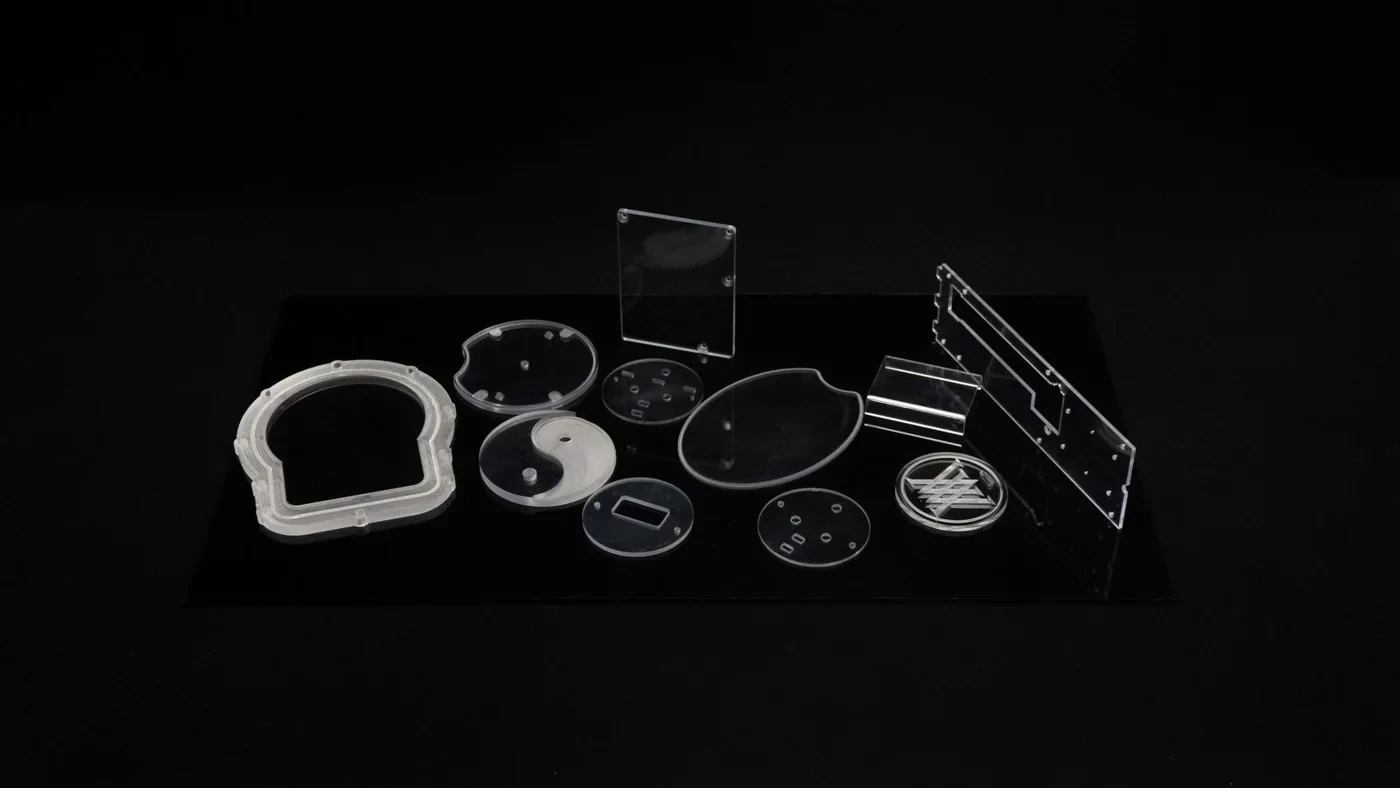
Cut to size panels and custom polycarbonate parts through a drawing led review of CNC routing, drilling, bending and finishing. Start with a material sample, approve a machined or formed first article, then release the repeat order configuration.
Source cut to size panels and custom polycarbonate parts through a drawing led review of CNC routing, drilling, bending and finishing. We help distributors, equipment OEMs and engineering teams define the material, geometry, sample and acceptance requirements before production. Use the part RFQ template to list the drawing revision, critical dimensions, first article quantity and production quantity. Before finalizing the drawing, review the industrial material selection guide and, where relevant, the polycarbonate versus glass comparison. Custom cut polycarbonate sheets for repeat orders For rectangular blanks, send a cut list with finished length, width and quantity by part number. For routed shapes, include a revision controlled drawing with hole locations, reference edges and the face to protect. Ask for separate prices for first article inspection and the production batch so you can compare repeat order costs.
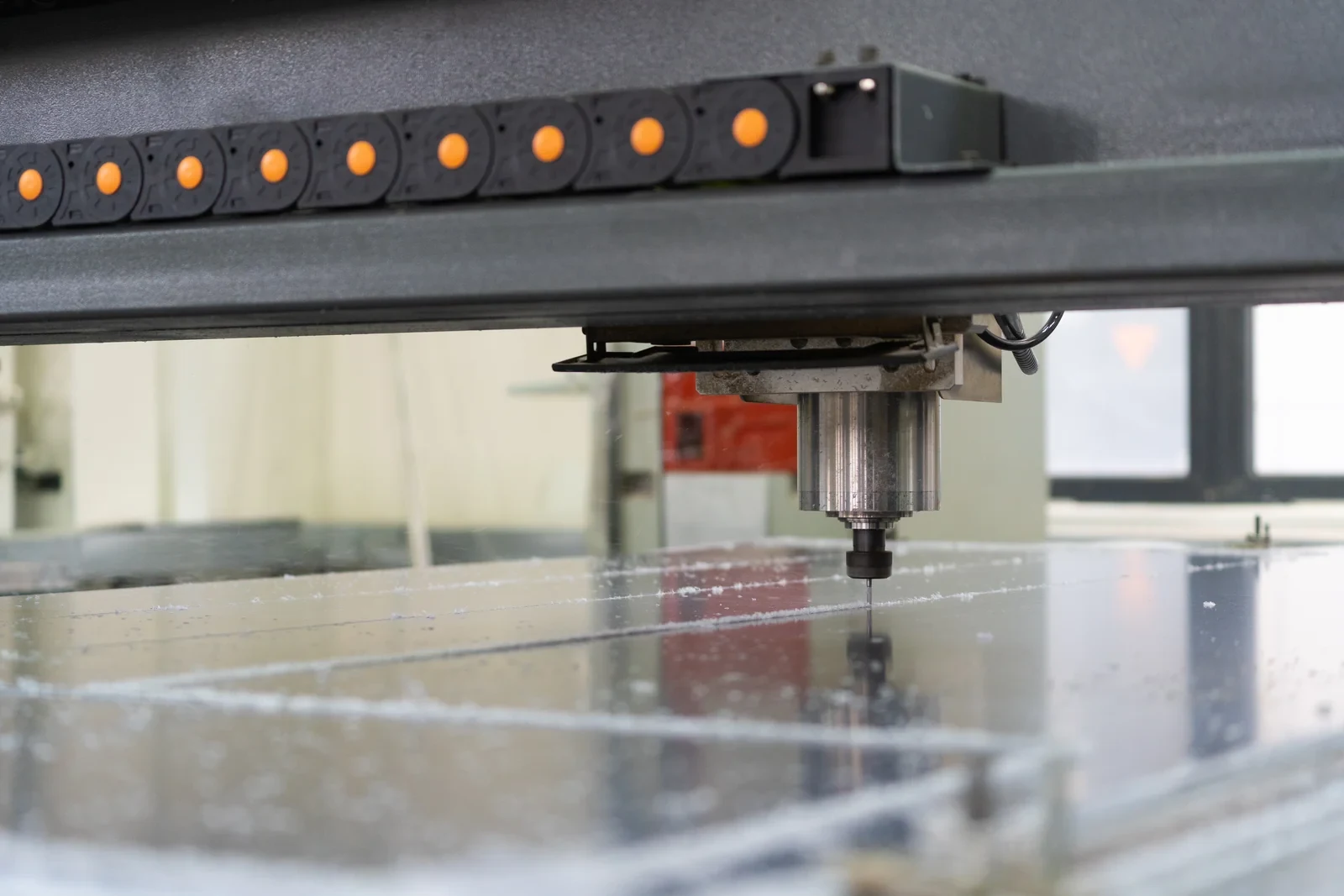
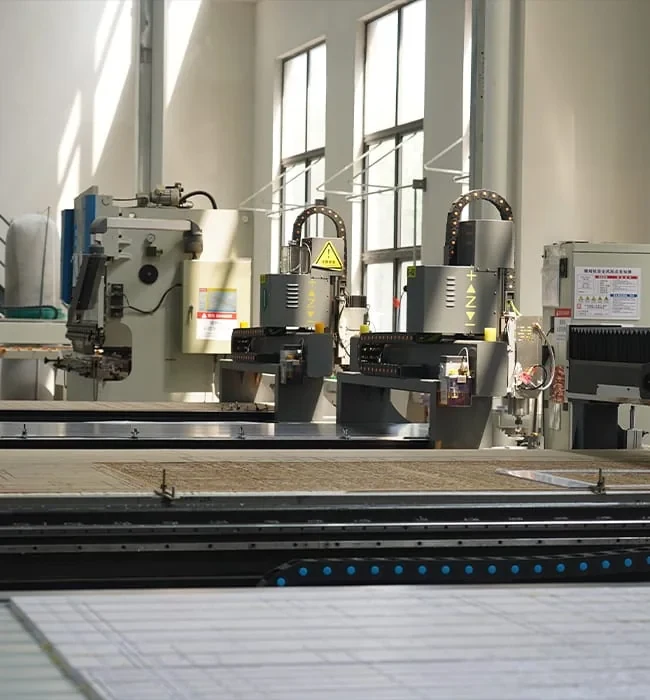
Lifestyle workshop archive: CNC sheet routing workcell. Mixed plastics process example; the material grade is not established by this photograph.
01 / DEFINE THE PART
Workshop processes. Drawing specific decisions.
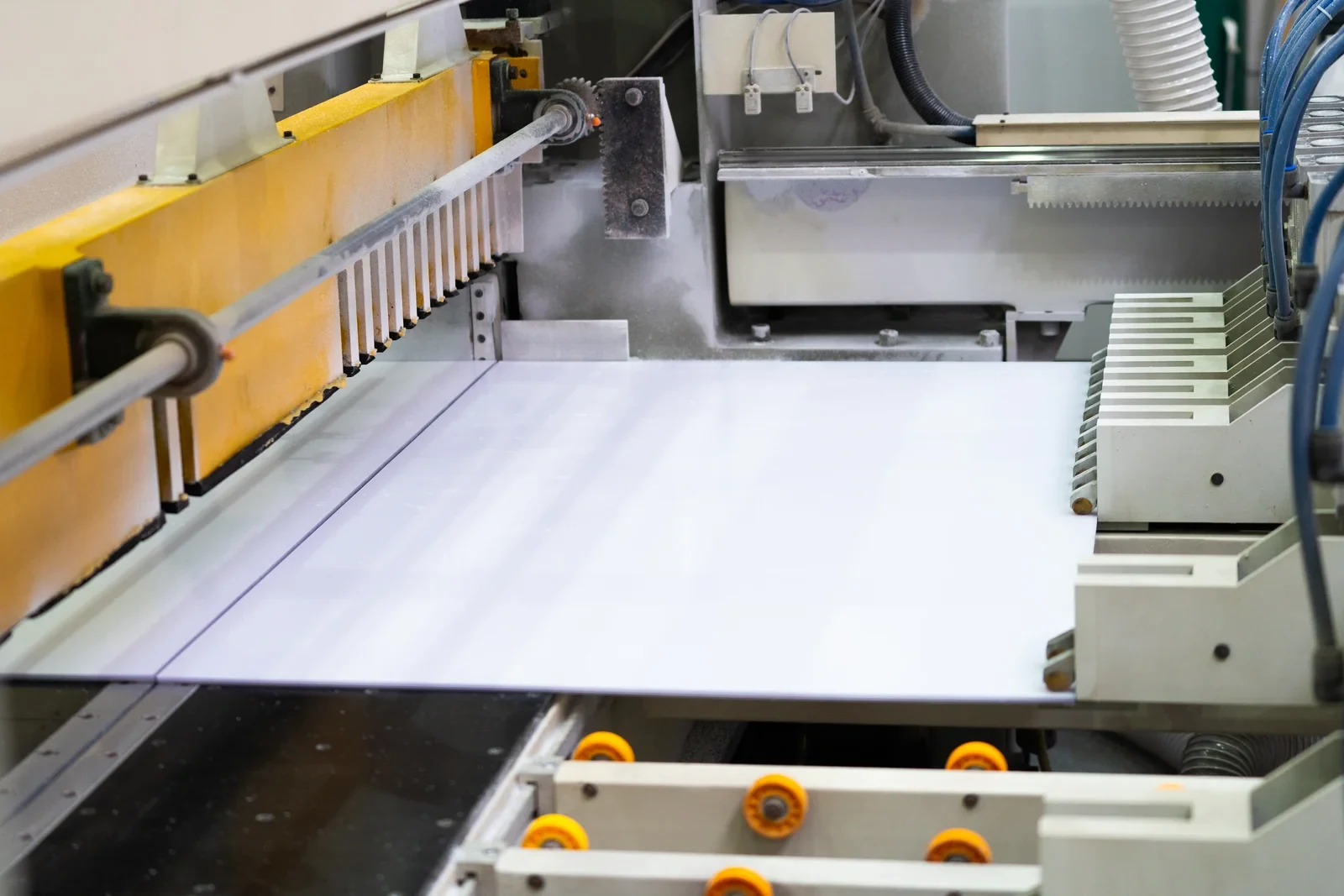
Cut to size sheet blanks
For rectangular panels and blanks, provide finished length, width, thickness, quantity and usable face requirements. Confirm allowances, squareness and whether the blank will be machined again. Sheet production variation and finished cut size tolerances are separate acceptance items.
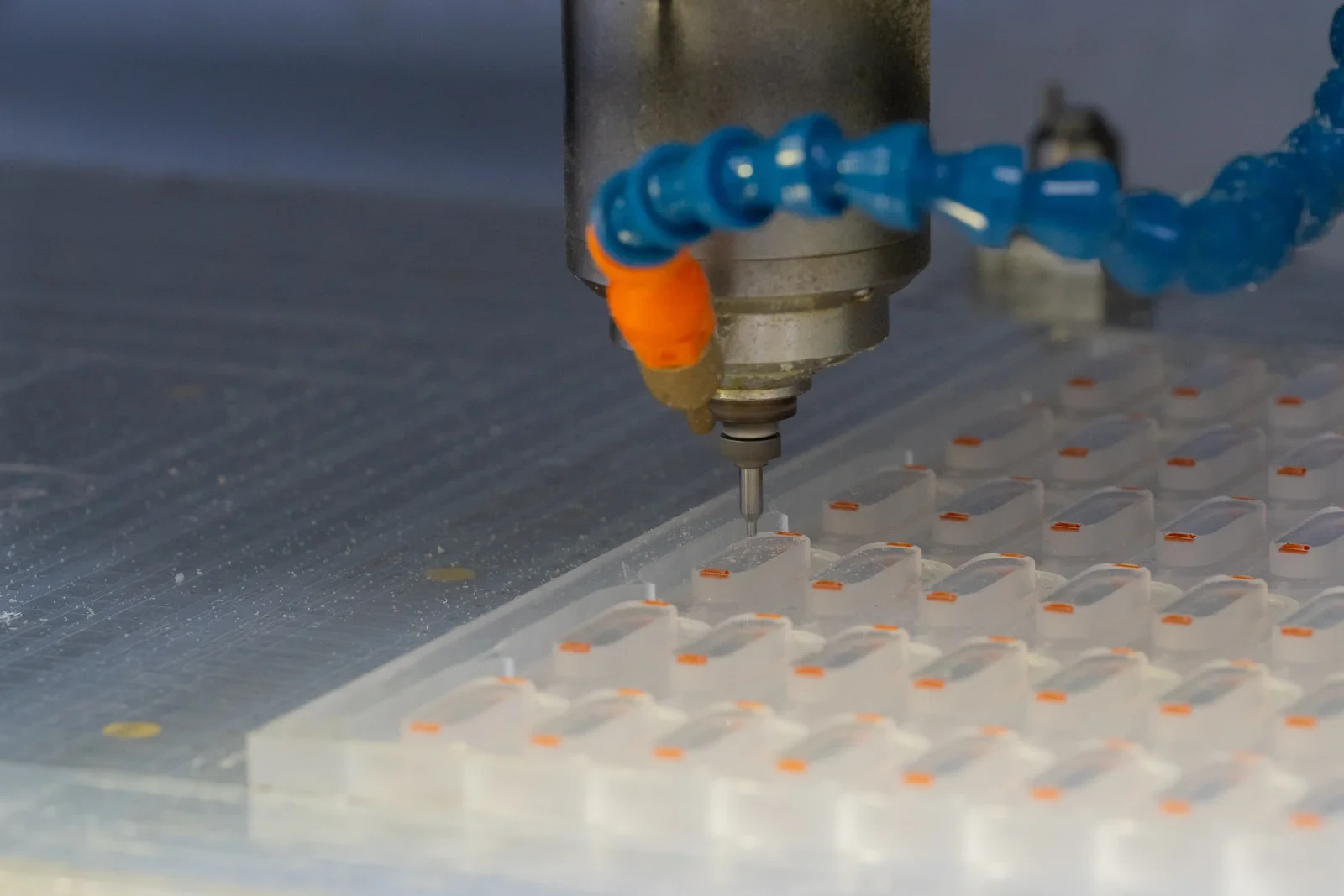
CNC machining of repeated recessed features. The photograph shows a mixed plastics process example, not a confirmed PC grade or achievable tolerance.
CNC profiles, pockets & grooves
For custom polycarbonate machined parts, identify profiles, pocket depths, internal corners, datums and critical mating features. Agree the drawing revision and inspection method before production. Material choice, geometry and workholding determine the proposed machining route.
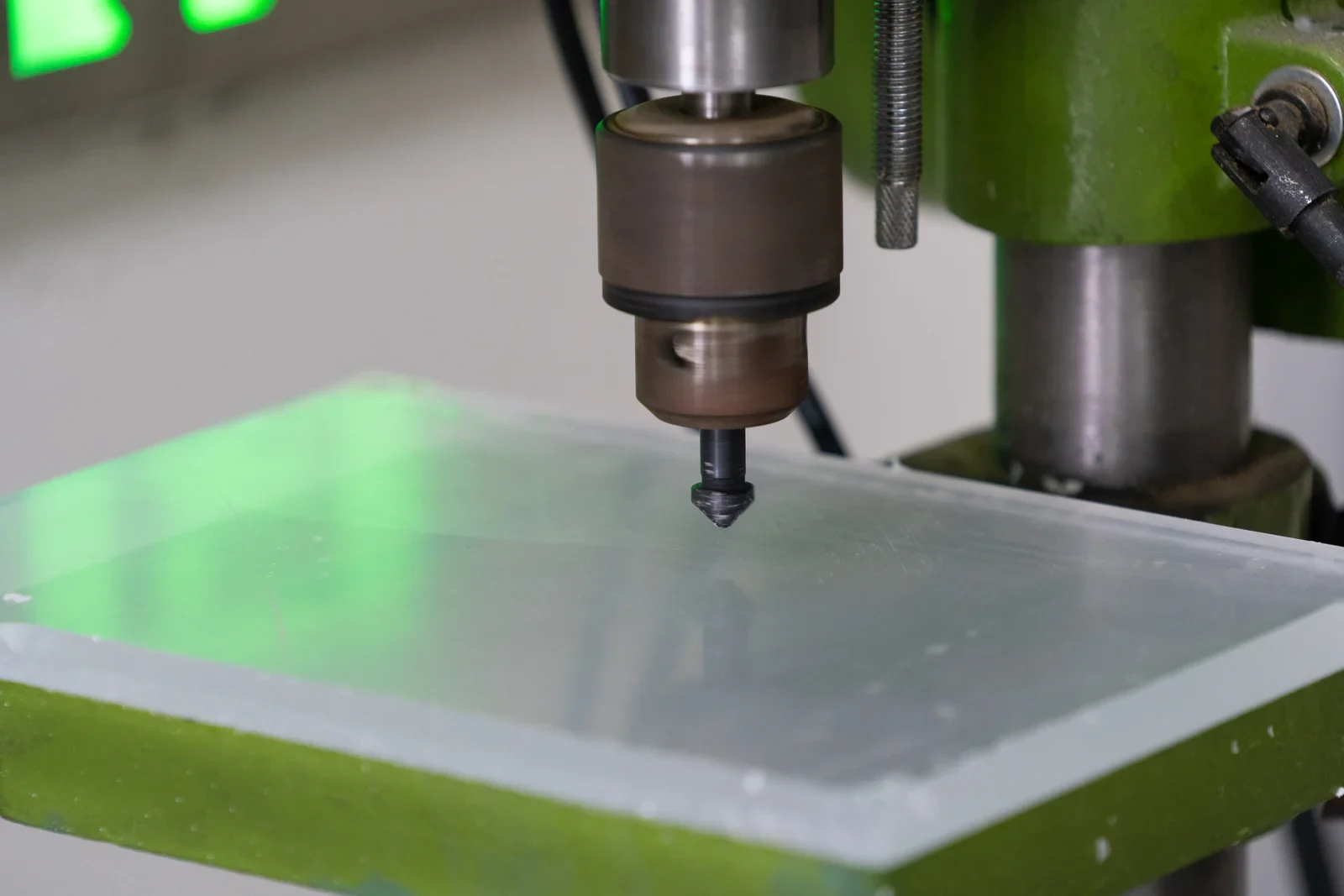
Drilling station setup from the Lifestyle workshop archive. Hole geometry and material suitability require a project specific review.
Drilling & mounting hole patterns
Specify hole diameter, position, edge distance, slot direction and the mating fastener or insert. Mark holes that control assembly alignment. Thermal movement and fastening requirements must be defined for the intended installation rather than inferred from a generic hole pattern.
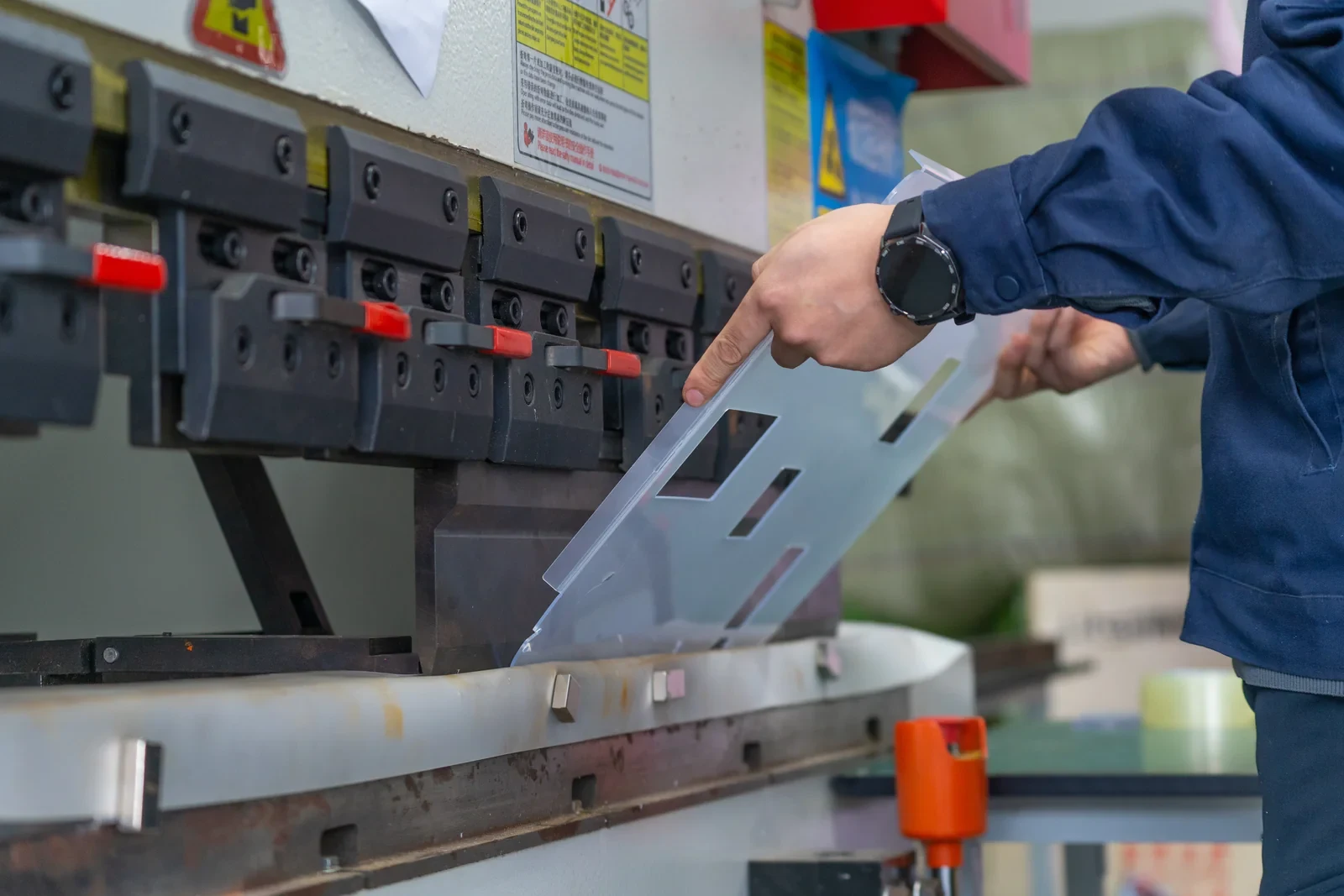
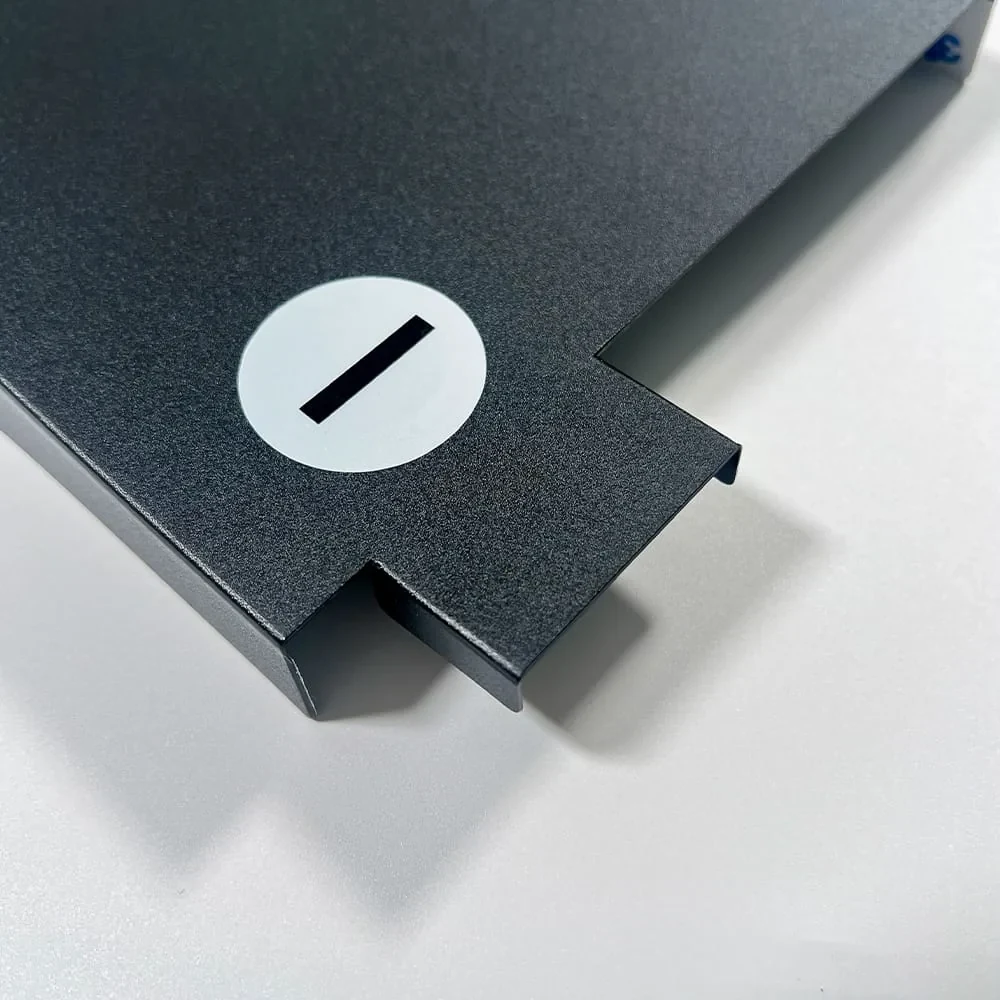
Folded panel process example with machined openings. This mixed material workshop photograph does not establish a PC grade, bend temperature or approved bend radius.
Folded panels & brackets
For bent panels, send the finished angle, flange dimensions, bend line locations and any cut outs near the bend. State thickness and coating before a forming route is proposed. Obtain sample approval where fit, appearance or coating condition is critical.
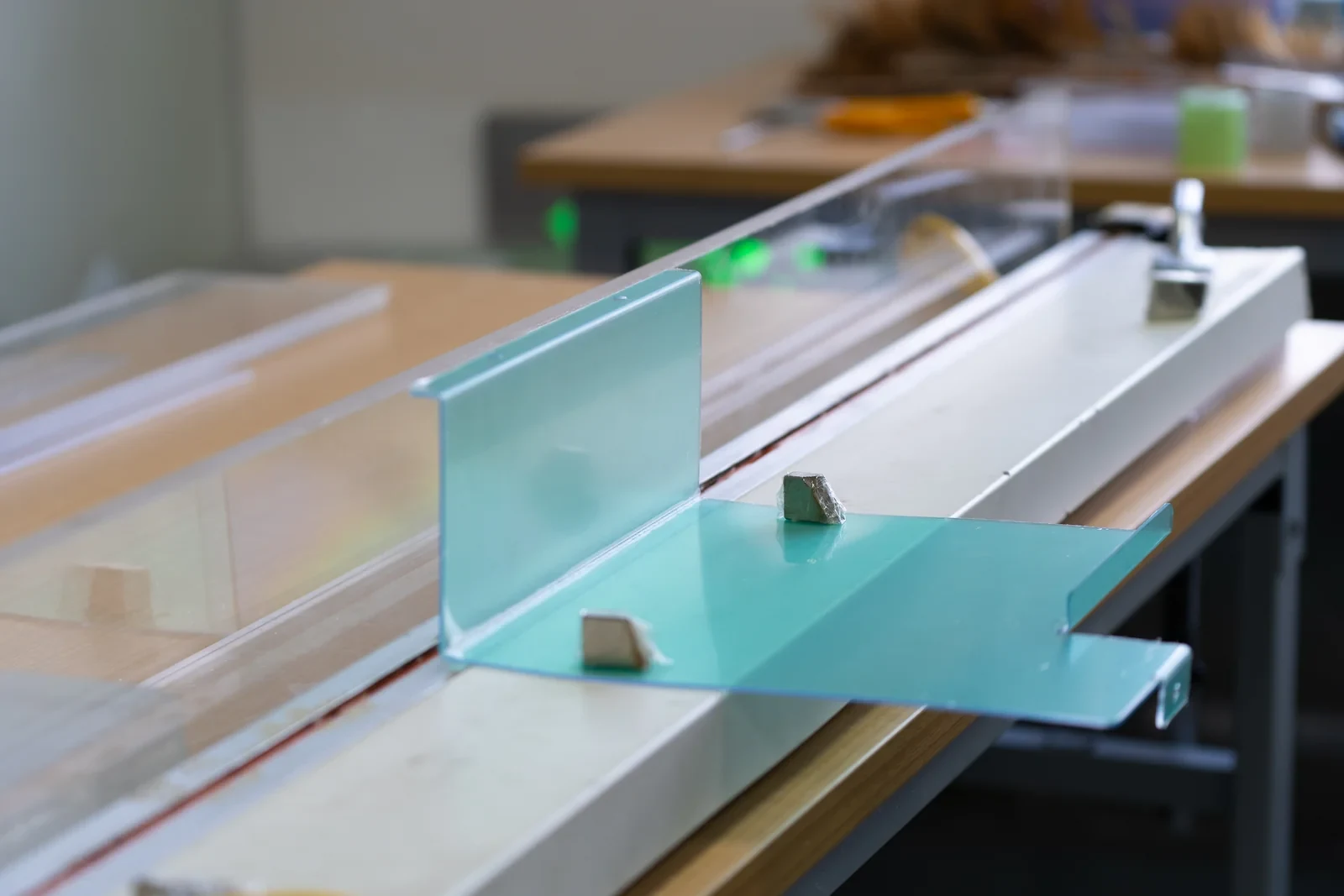
Line bending setup from the Lifestyle mixed plastics workshop archive. It is not evidence that every PC grade or hard coating can use this process.
Line bent covers & shaped panels
Define finished geometry, visible faces and optical viewing areas for covers or shaped panels. Bending and forming need grade specific approval; hard coated sheet requires a separate compatibility review. Agree a sample and inspection criteria before committing to a production batch.
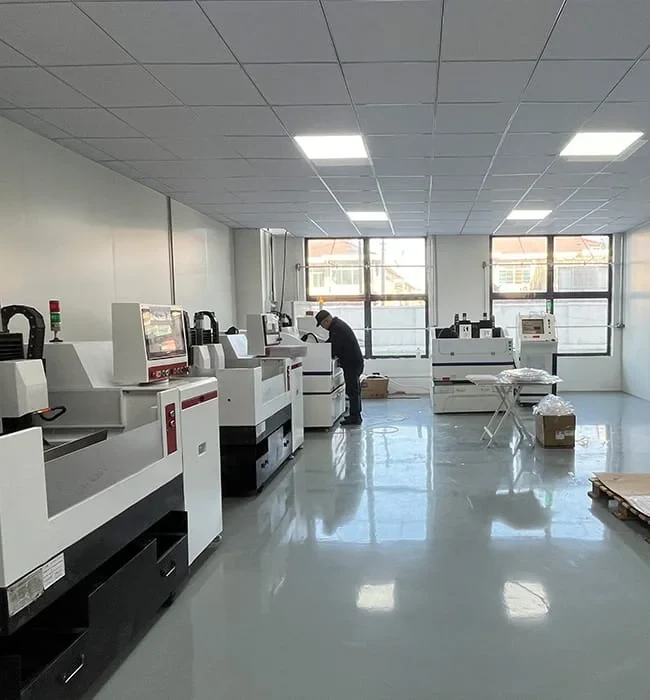
Edge polishing equipment in the Lifestyle workshop. Mixed plastics process illustration only; this is not a claim that diamond polishing is approved for every PC part.
Edge finish & appearance review
Identify visible edges, touch surfaces, burr limits and the required appearance. Select an edge finishing method compatible with the chosen material and coating. The polishing workcell shown is part of the wider plastics workshop, not a universal PC finishing recommendation.
Additional services for drawing led review include screen printing, UV printing and laser marking. Confirm artwork, coating faces, material compatibility and the approved appearance sample. Photographs show selected workshop operations, not every service or every material/process combination.
What should your fabrication enquiry include?
Choose the information relevant to your buying role. These routes lead to existing technical guides rather than duplicate product or application pages.
Procurement engineers & distributors
Request custom polycarbonate fabrication with a part list, quantities by revision, destination and target delivery window. Ask for sample scope, inspection records and packaging to be stated in the quotation. Separate one off development needs from repeat order pricing.
IoT & product engineers
For machined sensor window or enclosure panel enquiries, identify the clear viewing area, keep out zones, mounting features and coating faces. State optical or radio frequency validation requirements separately; machining a part does not establish complete device performance.
Equipment integrators & OEM buyers
For equipment window panels, covers or brackets, provide mating geometry, fixing details, cleaning chemicals and operating conditions. Agree dimensional and appearance acceptance before batch production. Safety approval of the installed assembly remains a separate responsibility.
End users & maintenance teams
For a replacement panel, provide a dimensioned sketch or drawing, photos of the installation and a non confidential description of the problem. Confirm material and fixing requirements before ordering. A photograph alone is not a production ready dimensional specification.
Custom Polycarbonate Parts by Application
Choose the closest component below and mark its acceptance criteria on the drawing. Use a material sample to review the sheet or finish, a first article to check the finished geometry, and the approved part number and revision for repeat supply.
CNC cut hard coated polycarbonate machine door panels
For a viewing door, outline the clear viewing zone, identify the operator and machine faces, and mark each fixing hole, slot, seal contact, visible edge and bend line. Send the frame or mating profile with the panel drawing. Ask the quotation to identify the proposed order of cutting, drilling, forming and coating for the selected construction.
On the first article, check mounting hole alignment, clearance at the frame, edge finish and marks in the viewing zone. Agree the cleaner, exposure and appearance check for the working face. Consult Lifestyle for the grade, coating sequence and bend compatibility. The equipment designer defines the protective duty and approval of the installed door. Review the abrasion resistant sheet options and machine window application brief.
Custom machined ESD polycarbonate enclosure panels
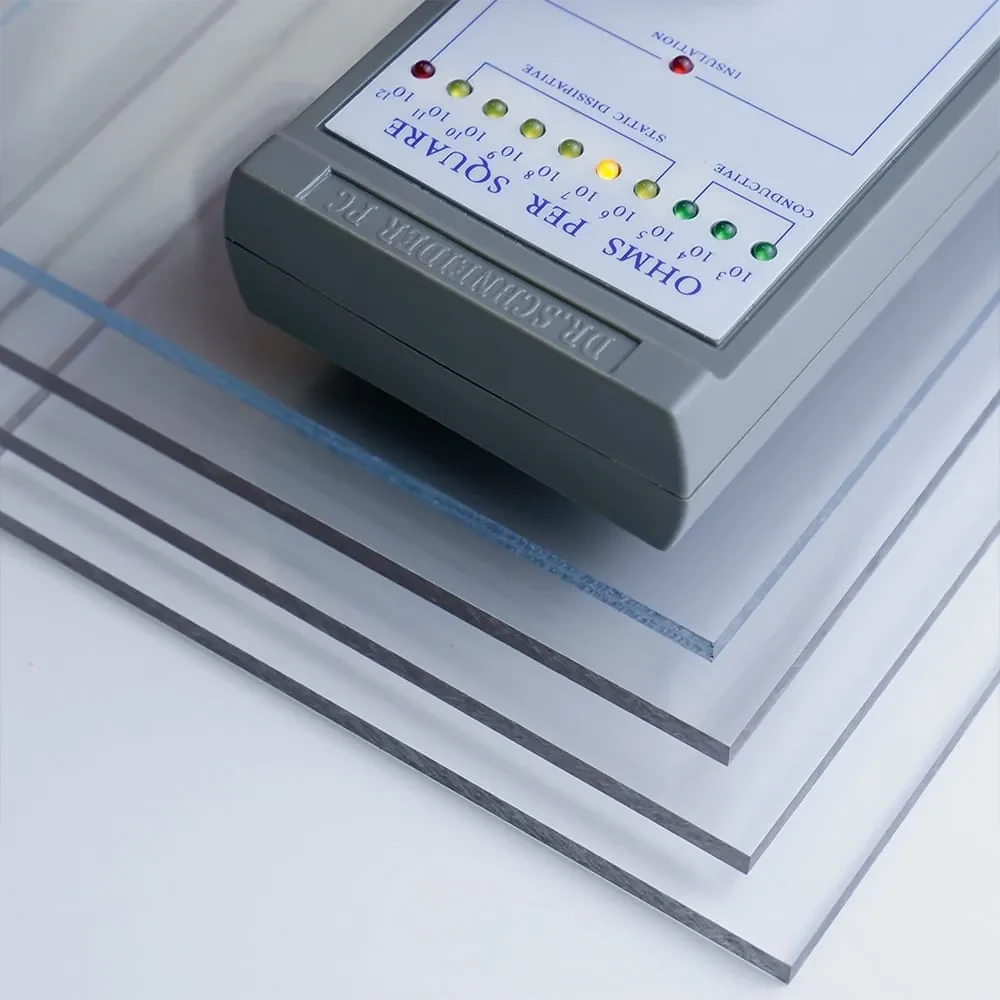
Mark the functional faces, exposed cut edges, machined holes and contact points on the enclosure drawing. If comparing a surface coated sheet and a modified extruded candidate, ask the bidder to identify the construction on each quotation line. Specify whether electrical acceptance applies to the incoming sheet or to the finished part after machining and cleaning.
Agree the test method, measurement locations and conditioning with the equipment team. Identify any bonding interface defined by the designer. Consult Lifestyle for the available construction, grade and applicable electrical evidence. Include the approved part and test record in the repeat order specification. See ESD sheet construction and supply options.
Cut to size polycarbonate battery insulation parts
Separate insulation sheets, spacer strips and cabinet panels by part number. For each part, identify the minimum permitted thickness, contact surfaces, datums, edge condition, slots, hole positions and any bend direction. State quantity per revision and identify the mating components used for a fit check.
Keep three entries on the first article record: dimensional fit, any electrical checks specified by the equipment designer, and the fire test document requested for the offered grade, colour and thickness. Assign an approver to each entry. Consult Lifestyle for the applicable stock, processing route and matching documents. See flame retardant sheet and insulation part configurations.
Cut panels, identification and packing by installation group
A facade contractor can mark panels by elevation and bay. A greenhouse buyer can mark them by span, roof or sidewall. A dome kit buyer can use a unit ID and component position. Send finished lengths, widths, orientation, quantity and spares for each mark. Request crate labels that match the installation schedule, and list protective film and visible face requirements.
For grey heat control panels, identify the approved shade sample, exposed face and agreed appearance limits on the cutting schedule. Consult Lifestyle for the quoted shade, available format, cutting allowances and packing. Use the shade selection table, facade takeoff guide or dome packing checklist for the project details.
02 / DRAWING TO PRODUCTION
An agreed process. A clearer handover.
Do not rely on a general tolerance or a generic material description where a part has critical requirements. Capture those requirements in the order specification.
01
Requirement & drawing review
Identify the drawing revision, units, material, operating environment and questions that need clarification.
02
Sample & acceptance agreement
Agree the purpose of a sample or first article, the critical dimensions and the evidence used for acceptance.
03
Production & inspection plan
Record the selected material, process, dimensional checks, appearance criteria and traceability requirements for the order.
04
Protection & packing
Agree protective film, part separation, packing quantities and shipping requirements for the destination.
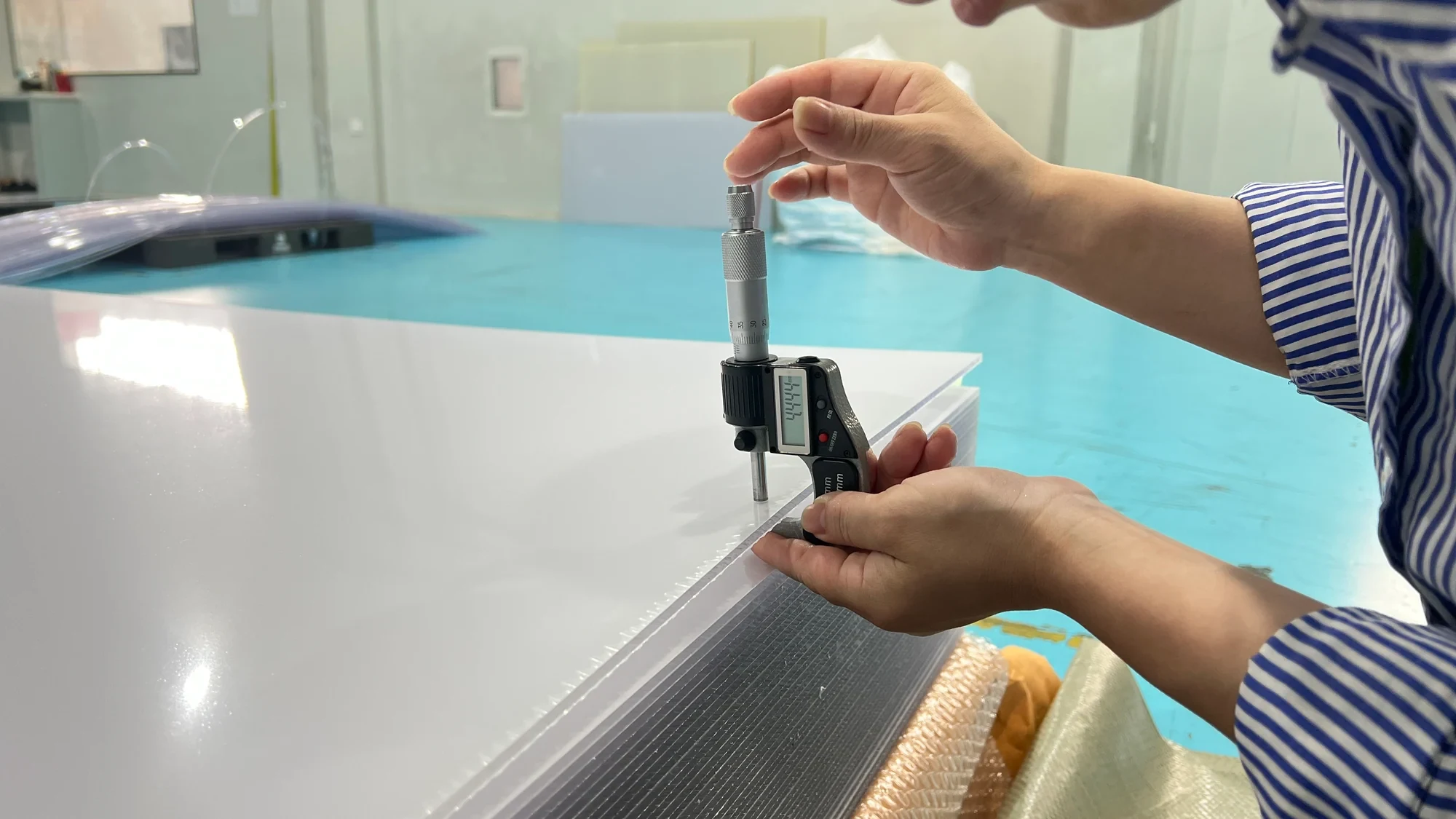
Sheet edge measurement with a handheld micrometer.
03 / ACCEPTANCE CRITERIA
Specify what matters to your assembly.
Mark critical to fit dimensions, hole positions, edges and visible faces. Identify the grade and coating before choosing the process. LCS-PC-103 requires confirmation of bending, forming and coating edge compatibility. Compare LCS-PC-101 reported sample results with the proposed material; specimen testing does not establish performance after fabrication.
Fabrication questions before order
Confirm process feasibility and inspection requirements before approving a drawing. More commercial answers: procurement FAQ and technical resources.
Agree each critical tolerance against the drawing, manufacturing process and technical agreement. State nominal sheet thickness, finished dimensions, datums, mating parts and inspection method. Record stock thickness variation separately from finished cut size and machined features. Consult Lifestyle for written acceptance limits on the offered configuration. Use the fabricated part RFQ template to identify the open items.
Hard coated PC can be considered for flat panels, CNC routing, milling and drilling after reviewing tools, edge condition and coating compatibility. Cold bending requires an approved grade specific radius. The reference of 2H 3H pencil hardness is not a guarantee without the applicable method and sample conditions. Large angle hot bending or thermoforming is generally unsuitable for standard hard coated stock unless specifically approved. Where forming is necessary, ask about forming before coating and validate a sample. See LCS-PC-103 process limits.
Yes. Send CAD (.dwg/.dxf), a dimensioned PDF, STEP or AI artwork with units, part number and drawing revision. Identify coated faces, bends, critical features and acceptance checks. Agree tolerances by drawing, process and technical agreement. The standard sample planning reference is 3 to 5 working days after scope, drawing and commercial confirmation. Consult Lifestyle for the selected grade, drawing and sample scope. A machined or formed first article needs its own schedule. Agree the NDA and file transfer method before sharing confidential drawings.
The guide lists 175 times sheet thickness as a reference cold bend radius for solid PC. Consult Lifestyle for the selected grade, drawing and sample scope. Request the written radius limit for the actual sheet, finish and forming route before releasing a curved part. Mark hole spacing and edge distances separately; the project designer must review fasteners, loads, movement and supports. For a coated part, confirm the sequence and inspect a representative first article. See the cold bending review checklist.
04 / REQUEST A FABRICATION QUOTE
Prepare the drawing. Protect the information.
Start with a non confidential description. We review CAD (.dwg/.dxf), dimensioned PDF, STEP and AI files. Arrange a signed NDA and an agreed file transfer method before sharing confidential engineering information; project specific drawings are used only for the agreed purpose.
Include: part name and drawing revision; units; material and surface requirements; overall dimensions; critical tolerances; hole and cut out details; edge finish; quantity; destination; requested delivery date.
Sample and supply agreement: The planning reference for a standard sample is 3 to 5 working days after confirmation of scope, drawing and commercial terms. Consult Lifestyle for the selected grade, drawing and sample scope. Identify tooling or sample fees, any additional tests, the approval revision and the start date in the quotation. Review the machining drawing checklist and sample and supply terms.
Custom polycarbonate prototypes and OEM sample development
1 · Define the component and acceptance criteria
You provide: intended use, operating environment, drawing revision, quantity stages and the optical, electrical, fire or surface requirements that matter. Identify critical dimensions and mating parts.
Agree before sampling: the proposed material, functional faces, sample purpose, applicable tests and the information still needed. An enquiry can begin with the application if the grade is unknown.
2 · Evaluate a material sample
Use a sheet coupon for: an initial review of colour, transparency, surface appearance or a defined material test. State the sample size and the required surface orientation.
Record the decision: sample identity, grade or trial formulation, thickness, test conditions and acceptance observations. A flat coupon does not establish the fit or performance of a finished component.
3 · Approve a machined or formed first article
You provide: the released drawing, hole and edge details, bend radii, artwork where relevant, and the mating part or assembly check. Clarify whether treatment occurs before or after fabrication.
Agree the checks: dimensions, fit, appearance and relevant functional tests on the proposed finished part. Tolerances follow the drawing, process and technical agreement; there is no universal machining tolerance.
4 · Release the repeat order configuration
Confirm: the approved sample and drawing revision, material and coating identity, inspection plan, quantities, protective film, packaging and delivery destination.
Retain for repeat orders: the agreed acceptance criteria and configuration record. Review changes to material, artwork, thickness or processing before repeating the order.
Printed polycarbonate prototype parts
For UV printed, screen printed or laser marked parts, supply artwork with its revision, viewing side, colour reference and required clear areas. Review print adhesion, coating compatibility and the intended cleaning conditions on a representative sample. Use the printed control panel RFQ guide.
Sample cost, development scope, minimum quantity and committed dates are confirmed in the quotation. The published standard sample guidance does not promise the same timing for a new formulation or an unqualified process. Review sample and supply conditions · Send your technical brief.
What to Put on a Fabricated Part RFQ
Use one line per part number and drawing revision. The example below shows what a buyer might submit for a machine door; replace each entry with the requirements of your own project.
| Part and revision | Material and faces | Critical geometry | First article acceptance | Delivery scope |
|---|---|---|---|---|
| Door panel A / drawing revision B; dimensions in mm | Request a clear hard coated PC candidate. Mark viewing area and required coated face on the drawing. | Identify datums, finished profile, mounting slots and seal contact edge. Flag any dimension needing agreement. | Check fit against the mating frame, inspect the viewing area and agree the cleaning trial with the buyer. | Quote a first article and the batch separately. Identify part labels, surface protection, packing group and destination. |
For polycarbonate first article inspection against the drawing, identify who releases the revision and who signs off each critical feature. Confirm tolerances by drawing, manufacturing process and technical agreement. Where the grade or process is undecided, describe the intended function and mark the field for supplier review.
Copy a brief for your own part
Include your drawing revision and quantities for the first article and repeat orders. Arrange an agreed file transfer method for confidential drawings. Consult Lifestyle for material availability, sample or setup charges and the schedule for your selected stage.
Samples and Supply Terms
Plan polycarbonate samples and sheet supply around the grade, dimensions, packing and destination. The starting policies below support an enquiry; the accepted quotation confirms the scope and timing for your order.
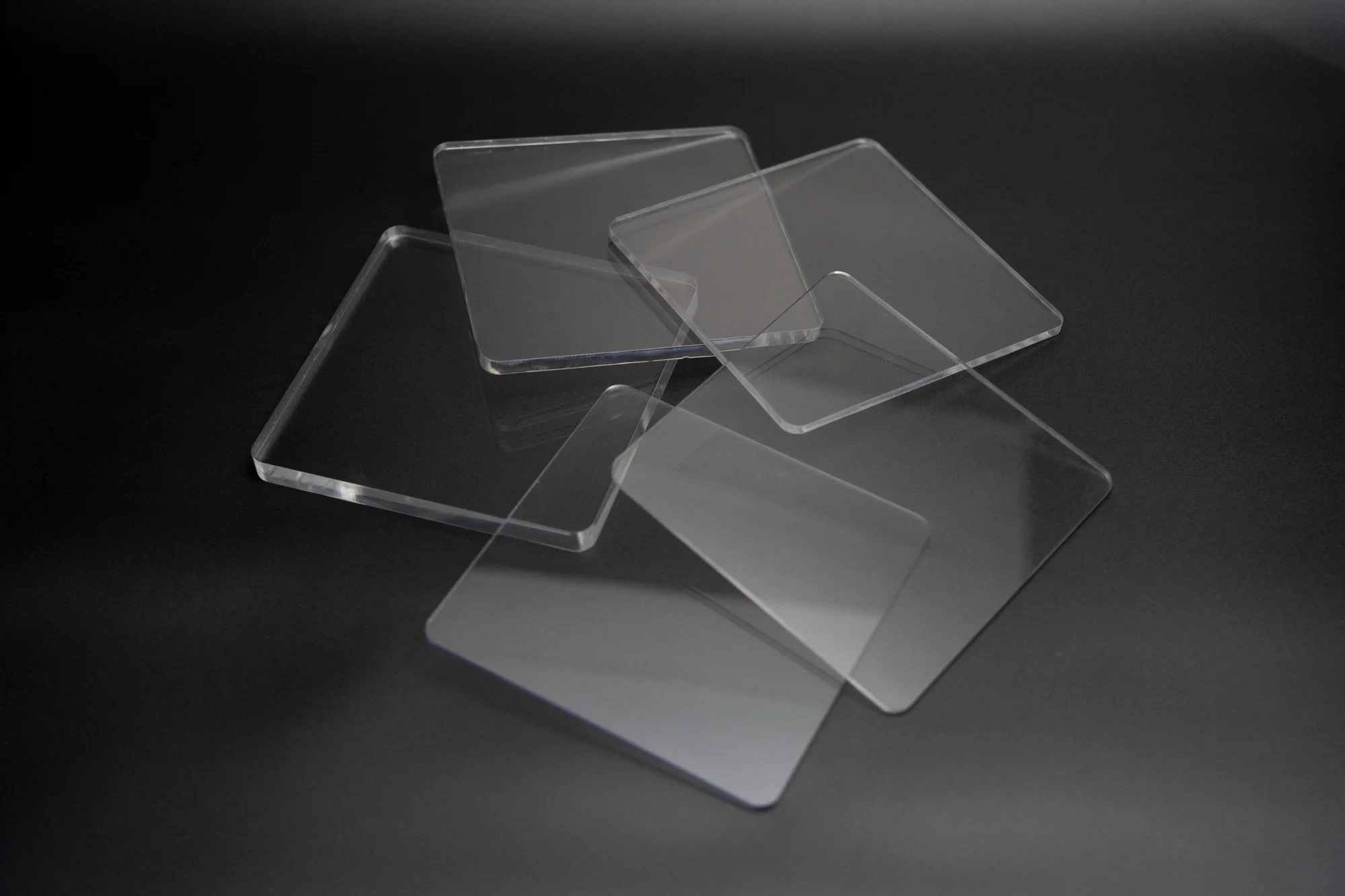
Clear sheet samples; the requested size and finish are confirmed separately.
01 / CHOOSE THE SAMPLE PURPOSE
What do you need to evaluate?
Tell us the material, finish and intended checks. A convenient sample format is not necessarily representative of a complete installed system.
Colour & surface
Compare appearance, surface texture and finish. Request the relevant grade and thickness rather than selecting by colour alone.
Geometry & fit
For fabricated parts, provide the drawing revision, critical dimensions and interfaces that need review.
Technical evaluation
Specify the test method, specimen requirements and laboratory needs before arranging material for testing.
Sample delivery
Standard available A4/A5 samples are offered free of charge, with freight paid by the buyer using an accepted courier account or prepaid freight. Special prototypes, larger samples and tooling may incur charges. Any credit against a later bulk order must be agreed in the quotation. Tell us the grade, thickness, colour, coating and purpose of the sample; a colour chip does not validate the performance of a complete assembly. See sample and supply terms. Standard sample preparation is normally 1 to 3 working days after both sample specifications and prepaid freight or the buyer’s courier account are confirmed.
02 / QUOTATION INPUTS
Material & geometry
Product family, grade if known, thickness, width, length, colour, finish and processing requirements.
Use & evidence
Application, environment, any coating or UV face requirements and the documentation your project needs.
Quantity & packing
Quantity with units, order frequency where relevant, protective film, labels and packing requirements.
Destination & timing
Country, delivery location or port, preferred shipping arrangement and your requested delivery date.
Wrapped sheet bundles on timber pallets during loading. Packing varies with the order.
03 / PROTECT THE SHIPMENT
Agree the protection. Then the shipment.
Typical protection comprises PE film on both faces, with printed film available by agreement, plus export pallets and the agreed combination of protective corners, straps and moisture resistant wrapping. The packing policy specifies fumigation exempt export wooden pallets; confirm pallet construction, documentation and destination requirements before shipment. Record package labels, dimensions, gross/net weights and handling requirements. This is a packing arrangement for the agreed transport conditions, not a claim of certification to an unspecified international packaging standard.
Packing shown in photographs is an example, not a universal packaging specification. The final arrangement must match the product, destination and agreed order requirements.
04 / COMMERCIAL POLICIES
Commercial policies & supply commitments
Trade terms
Available quotation bases include FOB, CIF, CFR, FCA, EXW and DDP under Incoterms 2020. State the named port or place and responsibilities in the order. We can coordinate with a buyer nominated forwarder or discuss door to door transport and customs clearance services. DDP and clearance assistance depend on the destination and accepted scope; not every quote includes freight, insurance, duties or taxes.
Packaging
Typical protection comprises PE film on both faces, with printed film available by agreement, plus export pallets and the agreed combination of protective corners, straps and moisture resistant wrapping. The packing policy specifies fumigation exempt export wooden pallets; confirm pallet construction, documentation and destination requirements before shipment. Record package labels, dimensions, gross/net weights and handling requirements. This is a packing arrangement for the agreed transport conditions, not a claim of certification to an unspecified international packaging standard.
Fabrication and first article approval
Drawing formats accepted for review include CAD (.dwg/.dxf), dimensioned PDF, STEP and AI (Adobe Illustrator). Include units, revision, material, finish and critical features. Tolerances are confirmed by the drawing, processing route and technical agreement; no single numerical tolerance applies to all parts. Pre production samples can be supplied for signed approval before bulk manufacture. The planning window is 3 to 5 working days after the sample scope, drawing and commercial arrangements are confirmed, subject to complexity and availability. Agree any tooling/sample fees and the approved sample revision.
Limited warranty
A 10 year limited warranty is offered for the anti yellowing and weather ageing performance of eligible double sided coextruded UV protected sheet products, subject to the written product specific warranty. It is not coverage for every product family or every property. Conditions include normal outdoor climatic exposure, correct UV face orientation where applicable, adequate thermal expansion clearance, compatible sealants and the supplied installation instructions. Exclusions include human caused scratching, strong acid/strong alkali cleaning damage, improper installation and force majeure. Obtain the eligible grade, start date, acceptance thresholds and claim procedure in writing. The separately listed 7 year PC material warranty for dome systems is not replaced by a blanket 10 year whole dome promise.
MOQ
The starting MOQ for standard sheet specifications is one pallet; sheet count depends on thickness and packing. For custom dimensions, colours, coatings or fabricated shapes, the MOQ is negotiated according to production process and raw material requirements. Do not assume a universal custom order tonnage. Confirm the product configuration, unit and minimum batch on the quotation; complete dome systems and fabricated parts are reviewed individually.
Sample and bulk lead times
Standard available A4/A5 sample preparation is normally 1 to 3 working days after specifications and prepaid freight or the buyer’s courier account are confirmed. Custom pre production samples for approval normally require 3 to 5 working days after drawing, sample scope and commercial confirmation; complexity and availability may change the schedule. Bulk production is normally 7 to 15 working days after the agreed advance payment or accepted formal L/C and final technical approval, including sample sign off where required. Confirm the committed dates in the quotation. Transit and customs time are separate.
For LCS-PC-102 custom size multiwall sheets, the business policy allocates half of custom size production wastage to the buyer. Agree the cutting plan, calculation and charge explicitly in the quotation.
Compare wholesale and OEM supply terms
| Quotation line | Ask the supplier to confirm in writing |
|---|---|
| MOQ and price breaks | List each grade, colour, thickness and size. Ask whether the minimum applies per configuration or across the order. Price the trial lot and each repeat release separately. |
| Lead time | Identify the event that starts production time, such as drawing approval or sample sign off. Request separate production, dispatch and estimated transit dates. |
| Freight and landed cost | Give the named port or delivery point. Request the Incoterms® rule and edition offered, freight, insurance where applicable, import clearance, duties and unloading responsibilities. Compare offers to the same destination. |
| OEM labelling and packing | Send artwork, panel marks and bundle requirements. Ask for feasibility, any set up cost and a packing label proof before release. |
| Distributor enquiries | State your market, customer applications, proposed stock sizes, first order quantities and reorder forecast. Ask for a written offer covering assortment, sample support and ordering terms. |
Check the documents for your grade · Review first article requirements · Request a written supply quotation
05 / DRAWINGS & FILES
Send a non confidential brief first. CAD (.dwg/.dxf), PDF, STEP and AI files can be reviewed. Arrange a signed NDA and an agreed transfer method before sharing customer specific drawings or confidential technical information. Materials are to be used only for the agreed project.
Choose the sample stage for your enquiry
Material sample
Use a coupon to review the proposed material, thickness, colour, functional face and a defined optical or material property. State the sample size and test purpose.
Identify what the sample must demonstrate and which grade matched documents you need; a coupon is not an approved production part.
Machined or formed first article
Provide the drawing revision, critical dimensions, mounting details, finish and any artwork. State the mating part or assembly check.
Agree the sample inspection and functional criteria before fabrication. Record approval before releasing the corresponding batch.
Repeat or bulk supply
Identify the approved configuration and sample/drawing revision, quantity, packing, destination and requested delivery date.
Reconfirm any changes to material, coating, geometry or artwork. The accepted quotation confirms costs, minimum quantity and committed timing.
Select “Material sample”, “Machined / formed first article” or “Bulk supply” in the optional Procurement stage field of the enquiry form. For a new formulation or process, review the development workflow; standard sample timing below is not a commitment for unqualified development work.
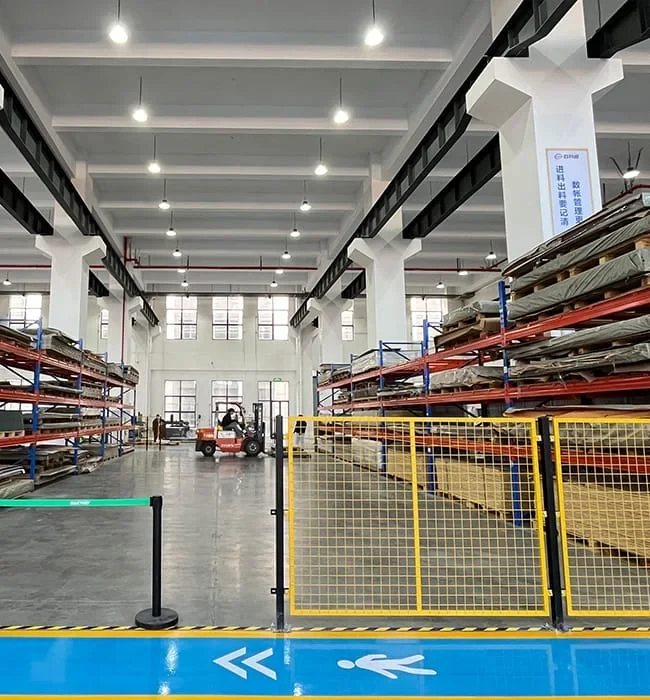
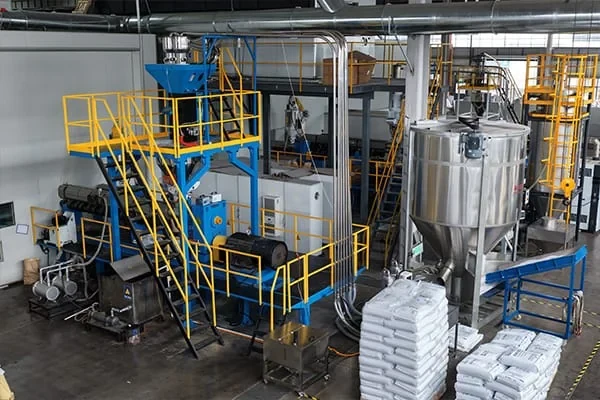
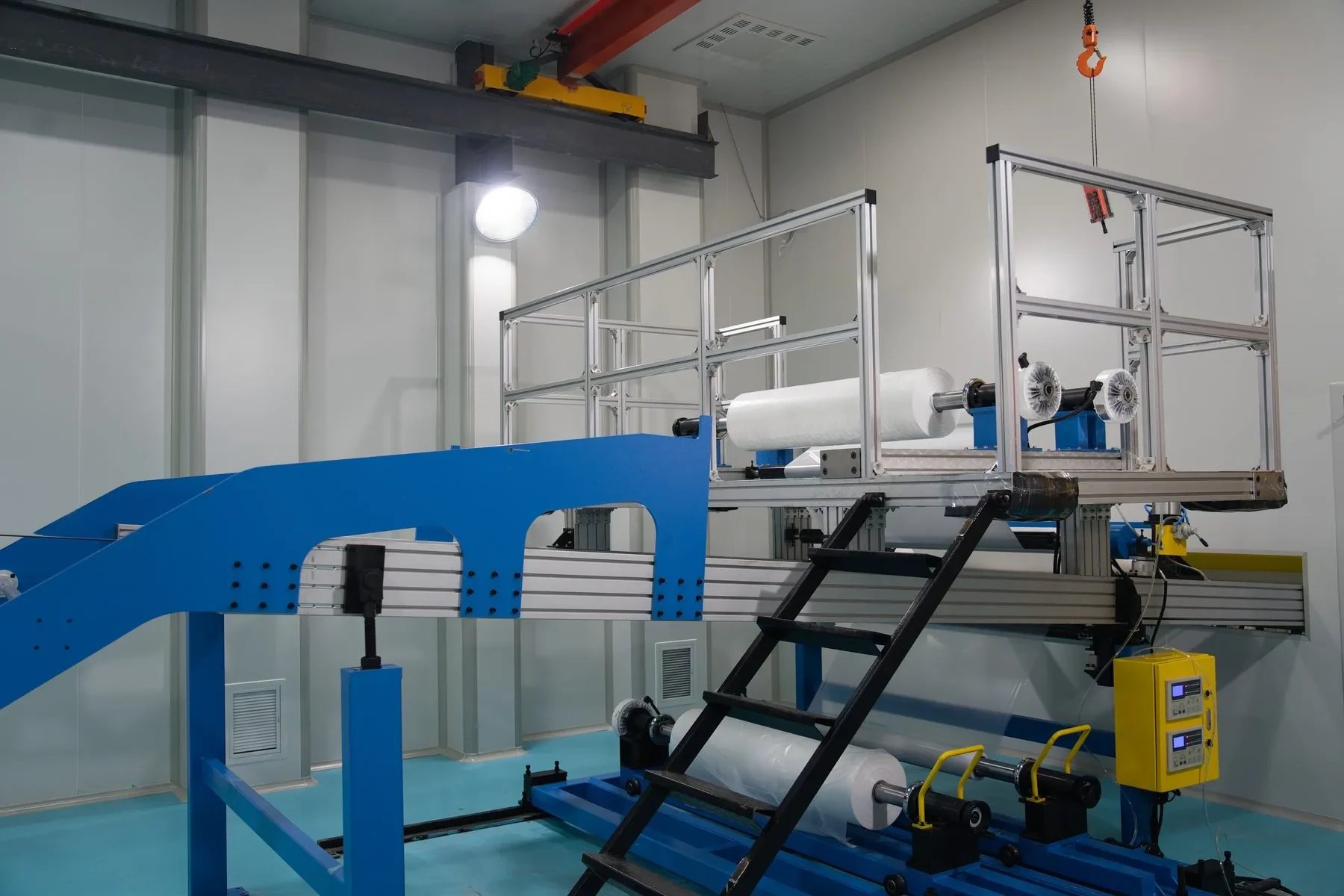
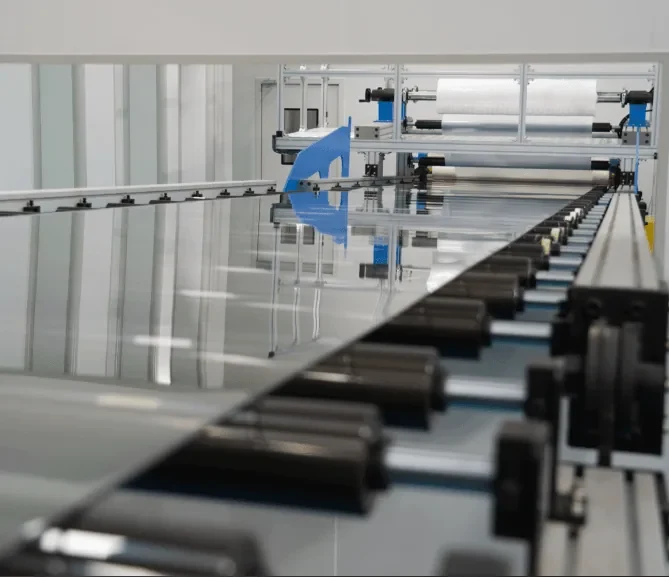
Workshop and Production Gallery


Request a Quote
Send your application, sheet thickness and dimensions, colour, quantity, destination and target date. Our team will reply with a recommendation and a clear quotation.
Phone: (945) 227-9608
Email: contact@lifestyleconstructionsupplies.com
Website: lifestyleconstructionsupplies.com
Address: 811 East Plano Pkwy Ste 117, Plano, TX 75074