
Steel Products by Lifestyle Construction & Supplies
Brass
Brass in H62, H65 and H70, as tube, rod and wire, with full composition and property data.
3 products with full specifications.
H62 BRASS LCS-SP-084
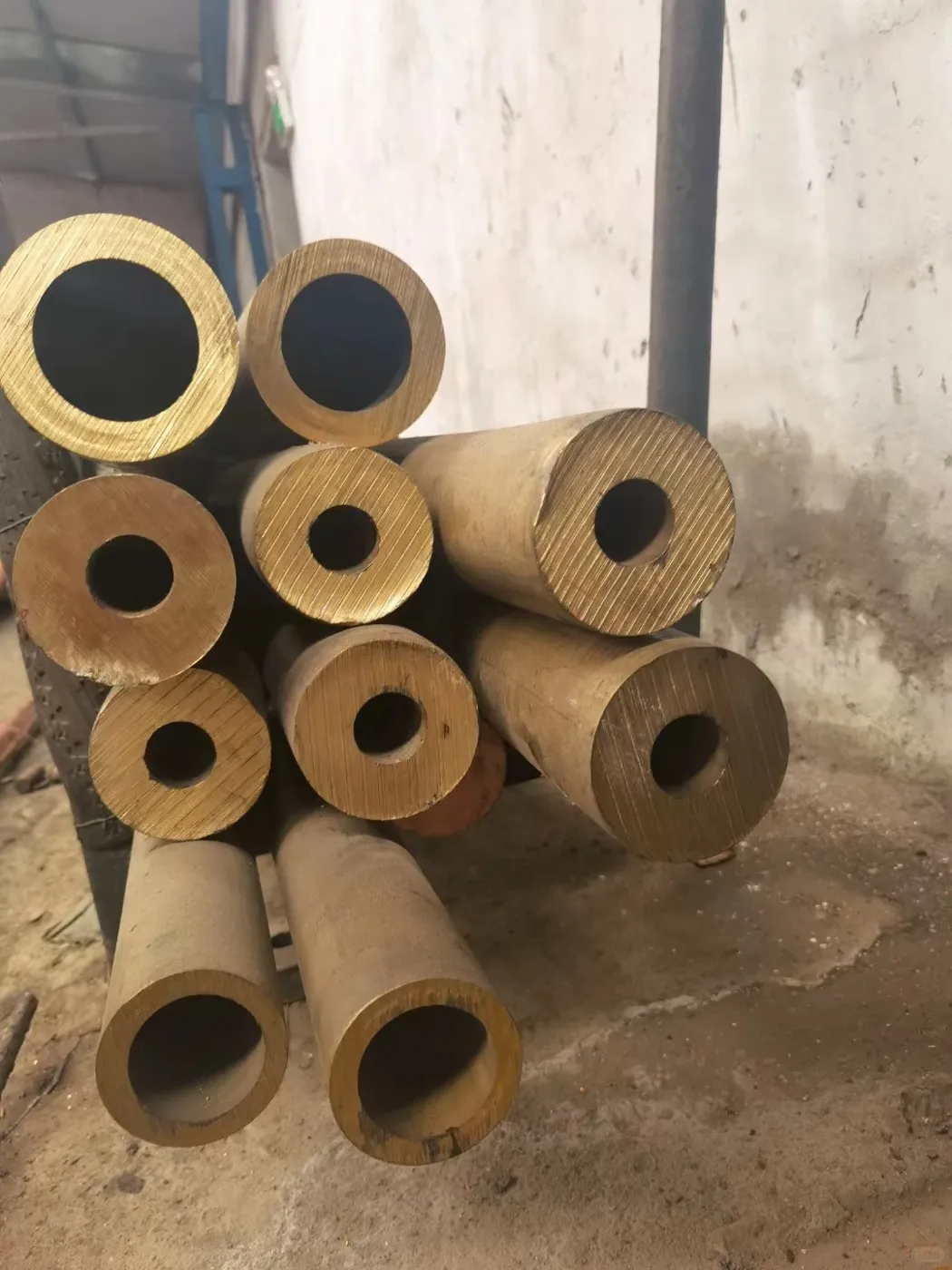
Designation and Standard
Common Name: H62 Brass
Chinese Standard (GB): H62
Unified Numbering System (Digital Code): T27600
Material Type: Copper-Zinc Alloy / Wrought Brass
Chemical Composition (by mass)
H62 is a binary (two-element) brass. Its composition is strictly regulated:
Copper (Cu): 60.5% to 63.5%
This is the main alloying element. The "62" in its name refers to the nominal copper content.
Zinc (Zn): Remainder (approximately 36.5% to 39.5%)
Impurities (Total ≤ 0.5%): Includes elements like Iron (Fe), Lead (Pb), Antimony (Sb), and Bismuth (Bi), which are kept to a minimum to ensure performance.
Microstructure
At room temperature, H62 Brass has a dual-phase structure (α+β').
The α-phase is soft and ductile (like pure copper).
The β'-phase is harder and stronger at room temperature.
This combination of phases gives H62 a good balance of strength and ductility compared to single-phase brasses.
Mechanical Properties
The mechanical properties of H62 are highly dependent on its temper (processing state). It is commonly supplied in various conditions. The values below represent typical ranges:
| Property | Typical Value / Range | Condition Notes |
|---|---|---|
| Tensile Strength | 315 ~ 630 MPa (45,700 ~ 91,400 psi) | Lower values for annealed (soft) state; higher values for cold-worked (hard) state. |
| Yield Strength | 130 ~ 450 MPa (18,900 ~ 65,300 psi) | Significantly increases with cold working (e.g., rolling, drawing). |
| Elongation | ≥10% ~ ≥30% | A measure of ductility. Higher in soft/annealed state, lower in hard/tempered state. |
| Hardness | 89 ~ 180 HV (approx. 50-90 HRB) | Varies greatly with temper. |
| Density | 8.43 ~ 8.5 g/cm³ (0.304 - 0.307 lb/in³) | Constant physical property. |
Key Characteristics
Good Combination of Strength and Plasticity: Unlike high-zinc brasses that are very brittle, or high-copper brasses that are very soft, H62 offers a useful middle ground.
Excellent Workability: It has good plasticity for cold working (like bending and deep drawing) and also performs well in hot working processes (like forging).
Good Machinability: While not as free-cutting as leaded brasses (like HPb59-1), H62 machines reasonably well for general purposes.
Corrosion Resistance: It has good resistance to corrosion in atmospheric, fresh water, and some chemical environments.
Typical Applications
Due to its balanced properties and relatively low cost, H62 is one of the most widely used brass grades. Common applications include:
Fasteners: Nuts, bolts, screws, rivets.
Hardware Components: Gaskets, bushings, washers, pipe fittings.
Radiator Parts: Tanks and pipes for automotive and industrial cooling systems.
General Engineering: Small structural parts, stampings, and deep-drawn items.
H65 BRASS LCS-SP-085
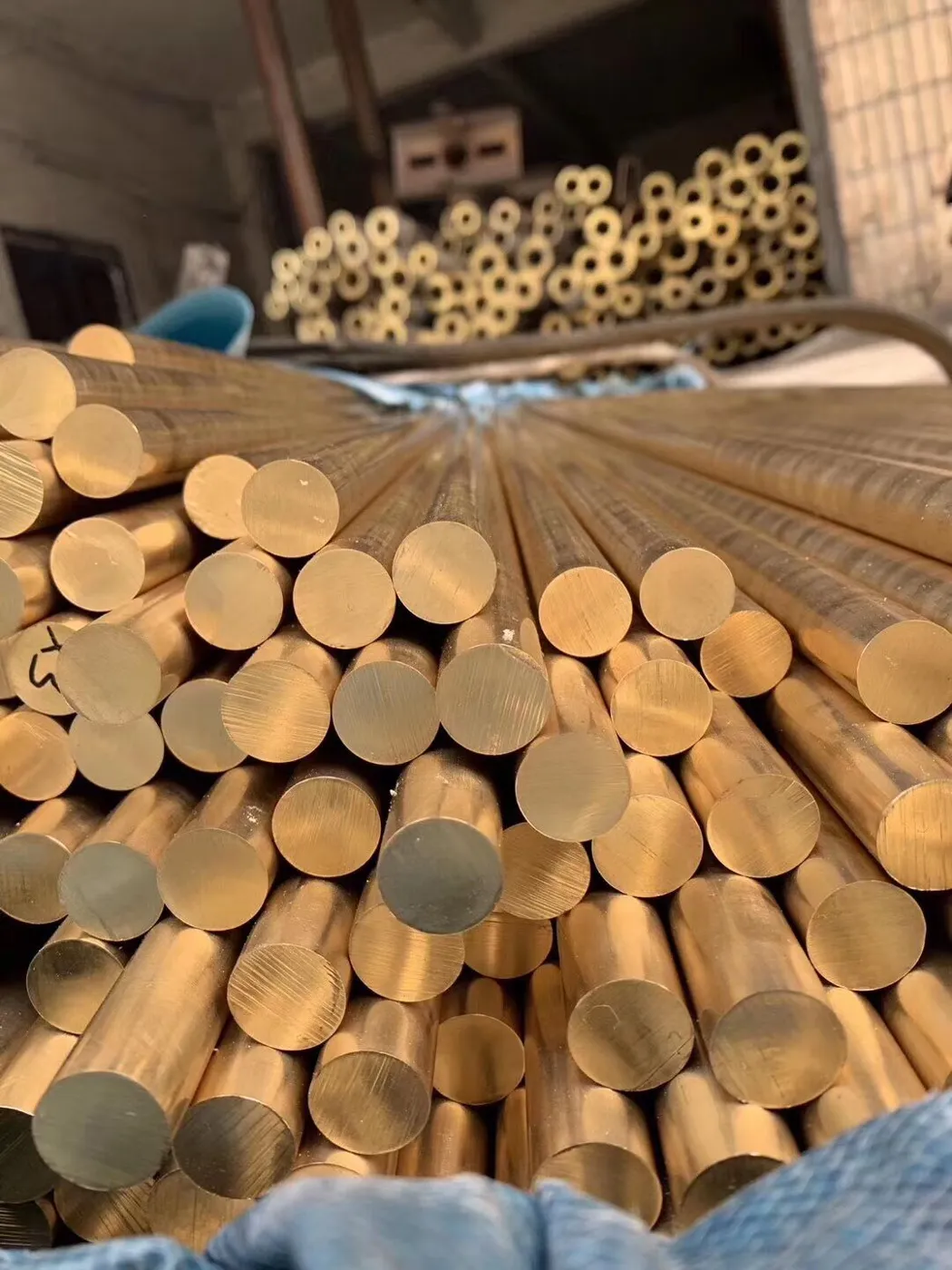
Designation and Standard
Common Name: H65 Brass
Chinese Standard (GB): H65
Other Names: Often referred to as 60/40 Brass (nominal composition), or corresponding to C2680 (Japanese JIS standard) or C27000 (UNS).
Material Type: Copper-Zinc Alloy / Wrought Brass
Chemical Composition (by mass)
H65 is a binary (two-element) brass. Its composition is strictly regulated:
Copper (Cu): 63.0% to 68.5%
This is the main alloying element. The "65" in its name refers to the nominal copper content. The higher copper content compared to H62 gives it better ductility.
Zinc (Zn): Remainder (approximately 31.5% to 37.0%)
Impurities (Total ≤ 0.5%): Includes elements like Iron (Fe), Lead (Pb), Antimony (Sb), and Bismuth (Bi), which are kept to a minimum to ensure performance.
Microstructure
At room temperature, due to its higher copper content (greater than 63%), H65 Brass has a single-phase structure (α) .
The α-phase is a solid solution of zinc in copper with a face-centered cubic (FCC) structure. This structure is inherently very soft and ductile, giving H65 its excellent formability.
Mechanical Properties
The mechanical properties of H65 are highly dependent on its temper (degree of cold work). It is commonly supplied in various conditions, from soft annealed to hard rolled. The values below represent typical ranges:
| Temper (Condition) | Tensile Strength (MPa) | Elongation (%) | Hardness (HV) | Typical Application Notes |
|---|---|---|---|---|
| M (Annealed/Soft) | ≥290 | ≥40 | ≤90 | For deep drawing and complex bending. |
| Y4 (1/4 Hard) | 235-410 | ≥35 | 85-115 | For light forming requiring some stiffness. |
| Y2 (1/2 Hard) | 355-460 | ≥25 | 100-130 | General-purpose parts, terminals, connectors. |
| Y (Hard) | 410-540 | ≥13 | 120-160 | For springs and parts needing higher strength. |
| T (Extra Hard) | 520-620 | ≥4 | 150-190 | High-strength structural components. |
| TY (Spring Hard) | ≥570 | —— | ≥180 | For applications requiring very high strength. |
Note: The table above compiles data from various sources. It shows that by selecting the appropriate temper, the tensile strength of H65 can be adjusted from approximately 290 MPa to over 570 MPa, offering great design flexibility.
Key Characteristics
Excellent Plasticity and Formability: This is the most outstanding feature of H65. Its single α-phase structure gives it one of the best cold-working properties among all brasses. It is ideal for deep drawing, bending, stamping, and other complex forming operations.
Good Balance of Properties: While primarily known for its ductility, it can achieve good strength through cold working, striking an excellent balance between strength and elongation.
Good Workability & Joinability: It performs well in cold and hot working. While machinability is moderate, it has excellent solderability (soft soldering) and can be easily plated or tinned.
Corrosion Resistance: It has good resistance to corrosion in atmospheric, fresh water, and some chemical environments.
Typical Applications
Due to its excellent formability, H65 is a preferred material for parts requiring complex shapes. Common applications include:
Electronics and Electrical: Terminals, connectors, sockets, radiator fins and tanks.
Architectural and Decorative: Door handles, lock components, lamp fittings, decorative grilles, nameplates, zippers.
General Hardware: Rivets, fasteners, springs, stampings, musical instrument components.
Industrial: Heat exchanger tubes, gaskets, washers, instrument parts.
H70 BRASS LCS-SP-086
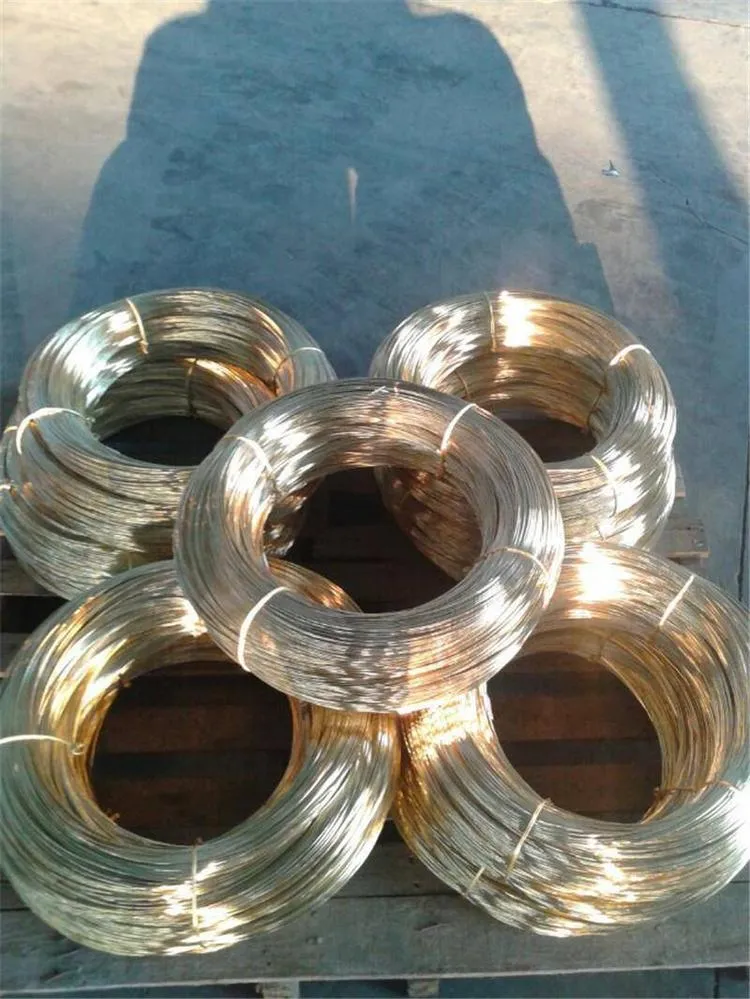
Designation and Standard
Common Name: H70 Brass
Also Known As: Cartridge Brass or 70/30 Brass (historically used for ammunition casings) .
Chinese Standard (GB): H70 (GB/T 5231-2012, GB/T 2059-2000) .
International Equivalents: C26000 (UNS), C2600 (JIS), ASTM B36/B36M .
Material Type: Wrought Copper-Zinc Alloy / Single-Phase Alpha (α) Brass .
Chemical Composition (by mass)
H70 is a high-copper binary brass with a strictly controlled composition to ensure its characteristic ductility .
| Element | Content (%) | Notes |
|---|---|---|
| Copper (Cu) | 68.5% – 71.5% | The nominal "70" refers to this high copper content. |
| Zinc (Zn) | Remainder | Approximately 29-31%. |
| Lead (Pb) | ≤ 0.03% | Kept low to preserve hot workability. |
| Iron (Fe) | ≤ 0.10% | Impurity limit. |
| Total Impurities | ≤ 0.3% | Includes elements like Ni, Sb, Bi. |
Microstructure & Physical Properties
Microstructure: Due to its high copper content (over 68%), H70 has a single-phase alpha (α) solid solution structure at room temperature . This face-centered cubic structure is inherently soft and ductile, giving H70 the best plasticity among all common brasses .
Physical Properties :
Density: 8.53 g/cm³
Melting Point: 966 – 1001 °C
Thermal Conductivity: ~140 W/(m·K) (Excellent for heat dissipation)
Electrical Conductivity: ~28-32% IACS (Sufficient for general applications)
Elastic Modulus: ~105 GPa
Mechanical Properties (Strongly Temper-Dependent)
Like H65, the mechanical properties of H70 vary dramatically with its temper (degree of cold work). It is available in various conditions from soft annealed to spring hard. The values below represent typical ranges:
| Temper (Condition) | Tensile Strength (MPa) | Yield Strength (MPa) | Elongation (%) | Hardness (HV) | Typical Application Notes |
|---|---|---|---|---|---|
| M (Annealed/Soft) | ≥290 - 315 | ~90 | ≥40 - 50 | 55 - 70 | For extremely deep drawing and complex forming. |
| Y4 (1/4 Hard) | 340 - 410 | ~250 - 300 | ~30 - 40 | 85 - 110 | For moderate forming with some added stiffness. |
| Y2 (1/2 Hard) | 370 - 460 | ~300 - 380 | ~20 - 30 | 100 - 130 | General-purpose parts, connectors. |
| Y (Hard) | ≥390 - 540 | ~400 - 450 | ≥3 - 12 | 130 - 160 | High-strength stamped parts, springs, cartridge cases. |
| T (Extra Hard) | 520 - 620 | ~500 - 580 | ≥4 | 150 - 190 | For very high strength requirements. |
Note: The table compiles data from multiple technical sources. The exact values depend on the specific product form (sheet, strip, wire) and testing standards. H70's key advantage is its ability to achieve a wide range of strengths while maintaining excellent formability in softer tempers .
Key Characteristics
Best Formability: H70 possesses the highest plasticity and cold workability of all common brass grades, making it the top choice for the most challenging deep-drawing and bending operations .
Excellent Strength-Ductility Balance: It offers a unique combination of high strength (when work-hardened) and exceptional ductility (when annealed), unmatched by lower-copper brasses .
Good Joinability: It has excellent solderability (soft soldering and brazing) and good weldability (with argon protection) .
Corrosion Resistance: Provides good resistance to atmospheric corrosion, fresh water, and some chemicals . However, it is susceptible to stress corrosion cracking (season cracking) if internal stresses from cold working are not relieved by annealing .
Typical Applications
H70 is the material of choice for parts requiring severe cold forming .
Ammunition: Cartridge cases (its historical and most famous application) .
Automotive: Radiator cores and tanks, heat exchanger components, cooling system parts .
Industrial: Deep-drawn parts,bellows, flexible hoses, pump components, gaskets .
Hardware & Electronics: Connectors, terminals, fasteners, springs, eyelets, rivets, zippers .
Comparison: H70 vs. H65 Brass
You asked about H65 earlier. Here is a quick comparison to highlight the differences:
| Feature | H70 Brass | H65 Brass |
|---|---|---|
| Cu Content | 68.5-71.5% (Higher) | 63.0-68.5% (Lower) |
| Microstructure | Single-phase α | Single-phase α (at higher Cu end) |
| Key Strength | Best plasticity & formability | Excellent formability, slightly higher strength potential in hard tempers |
| Typical Use | Most severe deep drawing (e.g., cases) | Deep drawing + general parts (e.g., terminals) |
In short, H70 is the specialist for ultimate formability, while H65 offers a slightly more balanced and cost-effective option for a wider range of applications.
If you have a specific application in mind (e.g., deep drawing a complex shape), I can help you decide between H70 and H65.
Request a Quote
Tell us the product, grade, standard, sizes and quantities your project needs. Our team will reply with a clear quotation and delivery plan.
Phone: (945) 227-9608
Email: contact@lifestyleconstructionsupplies.com
Website: lifestyleconstructionsupplies.com
Address: 811 East Plano Pkwy Ste 117, Plano, TX 75074