
Steel Supply by Lifestyle Construction & Supplies
Round Steel Bar
Round steel bar across the carbon, alloy, bearing and tool steel grades, with chemistry, mechanical properties and heat treatment data published for every grade.
The Range
10 Round Steel Bar
LCS-RND-801
12CrMo Alloy Round Steel Bar
LCS-RND-802
15CrMo Round Steel Bar
LCS-RND-803
16MnCr5 Alloy Round Steel Bar
LCS-RND-804
20CrMnTi Alloy Round Steel Bar
LCS-RND-805
30CrMnSi Alloy Round Steel Bar
LCS-RND-806
35CrMo Round Steel Bar
LCS-RND-807
38CrMoAl Alloy Steel Bar
LCS-RND-808
40Cr Round Steel Bar
LCS-RND-809
40CrMo SCM440 Round Steel Bar
LCS-RND-811
40CrNiMoA Alloy Round Steel Bar
LCS-RND-812
45 Round Steel Bar
LCS-RND-813
C 276 Round Steel Bar
LCS-RND-814
DT4C Pure Iron Round Steel Bar
LCS-RND-815
GCr15 Alloy Round Steel Bar
LCS-RND-816
Q345B and Q235 Round Steel Bar
LCS-RND-817
T10 Alloy Round Steel Bar
LCS-RND-818
10 Round Steel Bar LCS-RND-801
Product Introduction
10# steel bar belongs to high-quality carbon structural steel. The strength of this steel is slightly higher than that of 08 steel. It has good toughness, plasticity and weldability. It is rarely quenched and has no temper brittleness. Cold deformation has high plasticity, and is generally used for bending, calendering, bending and hammer arching. The welding performance of arc welding and contact welding is good. The thickness is small during gas welding, and cracks are prone to occur on parts with strict shape requirements or complex shapes. The machinability of the cold-drawn or normalized state is better than that of the annealed state, and it is often used to manufacture various mechanical parts with low force and high toughness requirements.
10# steel bar Steel Chemical Composition:
| Element | Composition (%) |
|---|---|
| Carbon (C) | 0.07~0.14 |
| Silicon (Si) | 0.17~0.37 |
| Manganese (Mn) | 0.35~0.65 |
| Phosphorus (P) | ≤0.035 |
| Sulfur (S) | ≤0.04 |
| Chromium (Cr) | ≤0.15 |
| Nickel (Ni) | ≤0.25 |
| Copper(Cu) | ≤0.25 |
10#Mechanical properties:
10# round steel tensile strength ob(MPa): 2335
10# round steel yield strength σs(MPa): 2205
Elongation of 10# round steel 85(%): 231
10# round steel section shrinkage ratio ψ(%): 255,
10# round steel hardness: not heat treated,< 137HBs,
10# round steel sample size: sample blank size is 18mm
Application
10# steel bar can be used to manufacture various parts with small loads and high toughness requirements, such as bolts, nuts, bearings, pins, bushings, gears, sprockets, etc. In addition, due to its good welding performance, it can also be used to make welded parts, carburized parts and welding rods with relatively small loads.
Classification
In the field of engineering and manufacturing, round steel is a common metal material, commonly used in the construction of structures or the manufacture of parts.It is a kind of steel with a circular cross-section, which can be classified according to different characteristics and uses.
1)Carbon steel round steel: This is the most common type of round steel, which is mainly composed of carbon and iron.According to the different carbon content, carbon steel can be divided into low-carbon steel, medium-carbon steel and high-carbon steel.They have good mechanical properties and weldability.
2)Alloy steel round steel: Alloy steel is a steel that adds other elements (such as chromium, nickel, molybdenum, etc.) to carbon steel to improve its characteristics.These alloying elements can increase hardness, corrosion resistance and high temperature properties.
3)Stainless steel round steel: Stainless steel has excellent corrosion resistance and is mainly composed of alloying elements such as chromium and nickel.It is commonly used in the manufacture of kitchenware, chemical equipment, etc.
4)Tool steel round steel: Tool steel is usually used in the manufacture of tools, molds and other tools.They have high hardness, wear resistance and heat resistance.
5)Bearing steel round steel: Bearing steel is used to manufacture parts of high-load and high-speed equipment such as bearings.They have good hardness and wear resistance.
6)Spring steel round steel: Spring steel is used in the manufacture of springs and has good elasticity and fatigue life.
7)Stainless steel round steel: used in the manufacture of parts in corrosion-resistant and high-temperature-resistant environments.
12CrMo Alloy Round Steel Bar LCS-RND-802
12CrMo Alloy Steel Bar is a pearlitic heat-strength steel with good cold strain plasticity and machinability, and weldability is acceptable. It is used to manufacture main pipes with steam parameters up to 510°C, superheated pipes with pipe wall temperatures up to 540°C, etc. It can also be used to make various elastic components working at high temperatures
12CrMo steel bar Chemical Composition
| Element | Composition (%) |
|---|---|
| Carbon (C) | 0.10~0.15 |
| Silicon (Si) | ≤0.30 |
| Manganese (Mn) | 0.60-0.90 |
| Sulfur(S) | ≤0.025 |
| Chromium (Cr) | 0.40-0.70 |
| Molybdenum (Mo) | 0.15~0.25 |
| Copper(Cu) | ≤0.25 |
| Nickel(Ni) | ≤0.025 |
Application
Compared with other materials, 12CrMoA alloy steel has the advantages of higher tensile strength, excellent toughness, good heat resistance and lower alloy cost. Compared with other materials, 12CrMoA alloy steel has the advantages of higher tensile strength, excellent toughness, good heat resistance and lower alloy cost. In addition, 12CrMoA alloy steel also has good welding performance and corrosion resistance, and is widely used in automotive, aerospace, chemical, electric power, oil and gas and other fields
Classification
Ⅰ. Classified by process
Round steel is divided into three types: hot rolled, forged and cold drawn. The specifications of hot-rolled round steel are 5.5-250 mm. Among them: 5.5-25 mm small round steel is mostly supplied in bundles of straight strips, which are often used as steel bars, bolts and various mechanical parts; round steel larger than 25 mm is mainly used for manufacturing mechanical parts and tube blanks of seamless steel pipes wait.
Ⅱ. Classification by chemical composition
Carbon steel can be divided into low carbon steel, medium carbon steel and high carbon steel according to chemical composition (that is, carbon content).
(1) Mild steel
Also known as mild steel, the carbon content is from 0.10% to 0.30%. Low carbon steel is easy to accept various processing such as forging, welding and cutting, and is often used to make chains, rivets, bolts, shafts, etc.
(2) Medium carbon steel
Carbon steel with a carbon content of 0.25% to 0.60%. There are killed steel, semi-killed steel, boiling steel and other products. In addition to carbon, it can also contain a small amount of manganese (0.70% to 1.20%). According to product quality, it is divided into ordinary carbon structural steel and high-quality carbon structural steel. Good thermal processing and cutting performance, poor welding performance. The strength and hardness are higher than low carbon steel, but the plasticity and toughness are lower than low carbon steel. Hot-rolled and cold-drawn materials can be used directly without heat treatment, or after heat treatment. Medium carbon steel after quenching and tempering has good comprehensive mechanical properties. The highest hardness that can be achieved is about HRC55 (HB538), and σb is 600-1100MPa. Therefore, in various uses of medium strength level, medium carbon steel is the most widely used. In addition to being used as building materials, it is also widely used in the manufacture of various mechanical parts.
(3) High carbon steel
Often called tool steel, the carbon content is from 0.60% to 1.70%, and it can be hardened and tempered. Hammers, crowbars, etc. are made of steel with a carbon content of 0.75%; cutting tools such as drills, taps, reamers, etc. are made of steel with a carbon content of 0.90% to 1.00%.
Classified by steel quality
According to the quality of steel, it can be divided into ordinary carbon steel and high-quality carbon steel.
(1) Ordinary carbon structural steel, also known as ordinary carbon steel, has wide restrictions on carbon content, performance range, and content of phosphorus, sulfur and other residual elements. In China and some countries, it is divided into three categories according to the guarantee conditions of delivery: Class A steel (Class A steel) is the steel with guaranteed mechanical properties. Class B steel (Class B steel) is steel with a guaranteed chemical composition. Special steel (C-type steel) is a steel that guarantees both mechanical properties and chemical composition, and is often used to manufacture more important structural parts. The most produced and used steel in China is A3 steel (Class A No. 3 steel) with a carbon content of about 0.20%, which is mainly used for engineering structures.
Some carbon structural steels also add trace amounts of aluminum or niobium (or other carbide-forming elements) to form nitrides or carbide particles to limit grain growth, strengthen the steel, and save steel. In China and some countries, in order to meet the special requirements of professional steel, the chemical composition and properties of ordinary carbon structural steel have been adjusted, thus developing a series of professional steel of ordinary carbon structural steel (such as bridges, buildings, Steel bars, steel for pressure vessels, etc.).
(2) Compared with ordinary carbon structural steel, high-quality carbon structural steel has lower content of sulfur, phosphorus and other non-metallic inclusions. According to the different carbon content and usage, this kind of steel can be roughly divided into three categories:
① Less than 0.25% C is low-carbon steel, especially 08F and 08Al with a carbon content of less than 0.10%, are widely used as deep-drawing parts such as automobiles and cans because of their good deep drawability and weldability ……wait. 20G is the main material for making ordinary boilers. In addition, low carbon steel is also widely used as carburizing steel for machinery manufacturing.
②0.25~0.60%C is medium carbon steel, which is mostly used in the quenched and tempered state to make parts in the machinery manufacturing industry.
③ More than 0.6% C is high carbon steel, which is mostly used in the manufacture of springs, gears, rolls, etc.
According to the different manganese content, it can be divided into two steel groups with ordinary manganese content (0.25-0.8%) and higher manganese content (0.7-1.0% and 0.9-1.2%). Manganese can improve the hardenability of steel, strengthen ferrite, and improve the yield strength, tensile strength and wear resistance of steel. Usually, the mark “Mn” is added after the grade of steel with high manganese content, such as 15Mn and 20Mn, to distinguish it from carbon steel with normal manganese content.
Classification by purpose
According to the application, it can be divided into carbon structural steel and carbon tool steel.
Carbon tool steel The carbon content is between 0.65 and 1.35%. After heat treatment, high hardness and high wear resistance can be obtained. It is mainly used to manufacture various tools, cutting tools, molds and measuring tools (see tool steel).
Carbon structural steel is divided into 5 grades according to the yield strength of steel: Q195, Q215, Q235, Q255, Q275
Each brand is divided into A, B, C, and D grades due to different quality. There are four types at most, and some have only one; in addition, there are differences in the deoxidation method of steel smelting.
Deoxygenation method symbol: F – boiling steel
b——semi-killed steel
Z——killed steel
TZ——special killed steel
Material of round steel: Q195, Q235, 10#, 20#, 35#, 45#, Q215, Q345, 12Cr1Mov, 15CrMo, 304, 316, 20Cr, 40Cr, 20CrMo, 35CrMo, 42CrMo, 40CrNiMo, GCr15, 65Mn, 50Mn , 50Cr, 3Cr2W8V, 20CrMnTi, 5CrMnMo, etc.
15CrMo Round Steel Bar LCS-RND-803
| Diameter | 10-800mm as your request |
|---|---|
| Length | 1-9m or As Customers’ Requirement |
| Heat treatment | Normalized / Annealed / Quenched / tempered |
| Surface | black,mill,polished,brush,etc |
| Usage | Structural Steel Bar |
| Place of Origin | Tianjin China |
| MOQ | 5 ton |
| Supply Ability | 5000 tons / month |
| Delivery time | Within 30 Days |
| Payment Terms | T/T , L/C |
15CrMo Steel Bar
15crmo is an alloy structural steel, which is composed of carbon, silicon and other alloying elements. 15crmo steel belongs to heat-resistant steel, and it still has high strength, machinability and so on in the environment of 500-550 ℃. 15crmo steel has the advantages of high strength, high toughness, and good corrosion resistance. This type of steel can be used to make various important parts, such as gears, crankshafts, seamless pipes, etc.
15CrMo features
Low-alloy heat-resistant steel, stronger than 12CrMo steel, toughness slightly lower, at 500-550 ° C or less have a higher heat resistance and oxidation resistance, and good mechanical properties, machinability and cold strain plasticity good weldability fair. Mainly used for the production of various caliber seamless steel pipe and sheet.
15CrMo steel chemical composition
| Grade | 15CrMo steel chemical composition (mass fraction) ( % ) | ||||||||
|---|---|---|---|---|---|---|---|---|---|
| C | Mn | Si | Cr | Mo | Ni | Nb + Ta | S | P | |
| 15CrMo | 0.12 ~ 0.18 | 0.40 ~ 0.70 | 0.17 ~ 0.37 | 0.80 ~ 1.10 | 0.40 ~ 0.55 | ≤0.30 | _ | ≤0.035 | ≤0.035 |
Application
Compared with other materials, 15CrMoA alloy steel has the advantages of higher tensile strength, excellent toughness, good heat resistance and lower alloy cost. Compared with other materials, 15CrMoA alloy steel has the advantages of higher tensile strength, excellent toughness, good heat resistance and lower alloy cost. In addition, 15CrMoA alloy steel also has good welding performance and corrosion resistance, and is widely used in automotive, aerospace, chemical, electric power, oil and gas and other fields.
15CrMo round bar mechanical
tensile strengthσb (MPa):≥440(45)
yield strength σs (MPa):≥295(30)
extensibility δ5 (%):≥22
reduction of area ψ (%):≥60
ballistic work Akv (J):≥94
notched bar impact strength αkv (J/cm2):≥118(12)
rigidity :≤179HB
specimen size:specimen size of rough30mm
Classification
Ⅰ. Classified by process
Round steel is divided into three types: hot rolled, forged and cold drawn. The specifications of hot-rolled round steel are 5.5-250 mm. Among them: 5.5-25 mm small round steel is mostly supplied in bundles of straight strips, which are often used as steel bars, bolts and various mechanical parts; round steel larger than 25 mm is mainly used for manufacturing mechanical parts and tube blanks of seamless steel pipes wait.
Ⅱ. Classification by chemical composition
Carbon steel can be divided into low carbon steel, medium carbon steel and high carbon steel according to chemical composition (that is, carbon content).
(1) Mild steel
Also known as mild steel, the carbon content is from 0.10% to 0.30%. Low carbon steel is easy to accept various processing such as forging, welding and cutting, and is often used to make chains, rivets, bolts, shafts, etc.
(2) Medium carbon steel
Carbon steel with a carbon content of 0.25% to 0.60%. There are killed steel, semi-killed steel, boiling steel and other products. In addition to carbon, it can also contain a small amount of manganese (0.70% to 1.20%). According to product quality, it is divided into ordinary carbon structural steel and high-quality carbon structural steel. Good thermal processing and cutting performance, poor welding performance. The strength and hardness are higher than low carbon steel, but the plasticity and toughness are lower than low carbon steel. Hot-rolled and cold-drawn materials can be used directly without heat treatment, or after heat treatment. Medium carbon steel after quenching and tempering has good comprehensive mechanical properties. The highest hardness that can be achieved is about HRC55 (HB538), and σb is 600-1100MPa. Therefore, in various uses of medium strength level, medium carbon steel is the most widely used. In addition to being used as building materials, it is also widely used in the manufacture of various mechanical parts.
(3) High carbon steel
Often called tool steel, the carbon content is from 0.60% to 1.70%, and it can be hardened and tempered. Hammers, crowbars, etc. are made of steel with a carbon content of 0.75%; cutting tools such as drills, taps, reamers, etc. are made of steel with a carbon content of 0.90% to 1.00%.
16MnCr5 Alloy Round Steel Bar LCS-RND-804
- Grade : 16MnCr5
- Number: 1.7131
- Classification: Alloy special steel
- Standard: EN 10084: 2008 Case hardening steels. Technical delivery conditions
- EN 10132-2: 2000 Cold rolled narrow steel strip for heat treatment. Technical delivery conditions. Case hardening steels
- EN 10263-3: 2001 Steel rod, bars and wire for cold heading and cold extrusion. Technical delivery conditions for case hardening steels
- EN 10297-1: 2003 Seamless circular steel tubes for mechanical and general engineering purposes. Non-alloy and alloy steel tubes. Technical delivery conditions
Product Introduction
Composition: The “16” in 16MnCr5 indicates approximately 0.16% carbon content. The main alloying elements are:
Manganese (Mn): Enhances hardenability, toughness, and wear resistance.
Chromium (Cr): Improves hardenability, strength, and wear resistance.
Hardenability: 16MnCr5 has good hardenability, which means it can be hardened by heat treatment to achieve higher strength and wear resistance.
Machinability: It has good machinability in the untreated or annealed condition.
Applications: 16MnCr5 is commonly used for various components in engineering, automotive, and general machinery industries, where a combination of high strength, good wear resistance, and toughness is required. Some typical applications include gears, shafts, axles, and other mechanical parts.
Heat Treatment: To achieve the desired mechanical properties, 16MnCr5 steel can be heat-treated through processes like quenching and tempering.
Weldability: It can be welded, but preheating and post-weld heat treatment might be necessary to avoid cracking and achieve good weld strength.
Equivalent Grades: 16MnCr5 is similar to other alloy steels like 5115, 15CrMn, 1.7131, and others.
| 16MnCr5 chemical composition | ||||||
|---|---|---|---|---|---|---|
| C(%) | Si(%) | M(%) | P(%) | S(%) | Cr(%) | |
| 16MnCr5 | 0.15 | 0.20 | 1.23 | ≤0.030 | ≤0.030 | 1.05 |
| 16MnCr5(ESR) | 0.15 | 0.20 | 1.23 | ≤0.0015 | ≤0.0015 | 1.05 |
| 16MnCr5 mechanical properties | |||||
|---|---|---|---|---|---|
| Yield strength Rp0.2 (Mpa) | Tensile strength Rm (Mpa) | Decrease in Area ᴪ (%) | Elongation A(%) | Impact toughness value akv(J/ c㎡) | hardness |
| ≥1187(90) | ≥880-1180 (100) | ≥57 | ≥9 | ≥34 | ≤207HB |
Application:
16MnCr5 alloy steel finds applications in various industries and components that require a combination of strength, toughness, and wear resistance. Some common applications include:
1)Gears and Gear Components: 16MnCr5 is widely used for manufacturing gears in different industries, including automotive, machinery, and power transmission systems. The alloy’s good wear resistance and toughness make it suitable for high-load and high-stress gear applications.
2)Shafts and Axles: Due to its high strength and good machinability, 16MnCr5 is used to make shafts and axles for various mechanical systems, such as in automotive drivetrains and industrial machinery.
3)Crankshafts: In the automotive and engine manufacturing sectors, 16MnCr5 can be employed to produce crankshafts due to its favorable combination of strength and fatigue resistance.
4)Pistons and Connecting Rods: For some high-performance applications, 16MnCr5 may be used in manufacturing pistons and connecting rods that require high strength and wear resistance.
5)Ball and Roller Bearings: The alloy’s good hardenability and wear resistance make it suitable for certain types of ball and roller bearings that are subject to high loads and rotational forces.
6)Machine Components: 16MnCr5 is utilized for various machine components such as spindles, camshafts, and other mechanical parts that require a balance of strength and toughness.
7)Fasteners: In some cases, 16MnCr5 can be used for manufacturing high-strength fasteners like bolts and studs that need to withstand substantial loads.
8)Die and Mold Components: Due to its good machinability and wear resistance, this alloy steel may find use in certain die and mold components for metal forming and casting processes.
It’s essential to note that the specific application of 16MnCr5 alloy steel may vary based on the heat treatment, manufacturing process, and requirements of the individual component. Engineers and manufacturers must carefully select the appropriate materials and treatments to ensure optimal performance and reliability for their particular application.
Classification By Size:
Diameter: Typically, 16MnCr5 alloy steel round bars are available in diameters ranging from 10 mm to 300 mm or more.
Length: The standard length for 16MnCr5 alloy steel bars is often 3 meters or 6 meters. However, custom lengths may also be available upon request.
Tolerance: Depending on the manufacturing process and the specific requirements of the customer, the tolerance for diameter and length may vary. Common tolerances for diameter are within a few millimeters.
Custom Shapes: Manufacturers can produce 16MnCr5 alloy steel in custom shapes based on the specific requirements of the application. This flexibility allows for a wide range of uses in various industries.
20CrMnTi Alloy Round Steel Bar LCS-RND-805
The main characteristics and application areas of 20CrMoTi round steel:
1)Strength and hardness: 20CrMoTi round steel has high yield strength, tensile strength and hardness, and can withstand large static and dynamic loads.This makes it very suitable for manufacturing parts that require high strength and wear resistance.
2)Heat treatment performance: 20CrMoTi round steel has good heat treatment performance, and its structure and performance can be adjusted by heat treatment methods (such as normalizing, quenching, and tempering) to meet specific engineering requirements.
3)Corrosion resistance: Due to the chromium content, 20CrMoTi round steel has good corrosion resistance and performs well in some applications with corrosive environments.
- Application areas: 20CrMoTi round steel is widely used in the manufacture of high-strength and high-load parts and mechanical components such as construction machinery, automobile transmission parts, ship parts, oil drilling rigs, agricultural machinery, etc.
Chemical composition table for 20CrMoTi round steel:
| Element | Chemical Composition Range |
|---|---|
| Carbon (C) | 0.17-0.23% |
| Silicon (Si) | 0.17-0.37% |
| Manganese (Mn) | 0.40-0.70% |
| Phosphorus (P) | ≤0.035% |
| Sulfur (S) | ≤0.035% |
| Chromium (Cr) | 0.80-1.10% |
20CrMoTi is an alloy structural steel, commonly used in the manufacture of mechanical parts, such as gears, shafts, etc.The following are the general mechanical properties parameters of 20CrMoTi:
1)Yield strength (tensile strength): approximately 835 MPa (MPa).
2)Tensile strength: about 980 MPa.
3)Elongation: about 12%.
4)Impact toughness: about 60 J/cm2 (at 20℃)
Classification By Size:
Here are some common size classifications for round steel:
Small Diameter: Typically refers to round steel with a diameter ranging from 5mm to 25mm.
Medium Diameter: Refers to round steel with a diameter ranging from 25mm to 100mm.
Large Diameter: Refers to round steel with a diameter exceeding 100mm.
Classification By Size:
Diameter: Typically, 16MnCr5 alloy steel round bars are available in diameters ranging from 10 mm to 300 mm or more.
Length: The standard length for 16MnCr5 alloy steel bars is often 3 meters or 6 meters. However, custom lengths may also be available upon request.
Tolerance: Depending on the manufacturing process and the specific requirements of the customer, the tolerance for diameter and length may vary. Common tolerances for diameter are within a few millimeters.
Custom Shapes: Manufacturers can produce 16MnCr5 alloy steel in custom shapes based on the specific requirements of the application. This flexibility allows for a wide range of uses in various industries.
30CrMnSi Alloy Round Steel Bar LCS-RND-806
| Size | Diameter:20mm-1000mm Length:500mm-6000mm |
|---|---|
| Origin place | Made In China |
| Delivery Condition | Hot rolled,cold drawn,forged |
| Surface require | Black,grinding,bright,polish |
| Heat treatment | Quenched,Tempered,annealed |
| Packing | seaworthy packing ,wooden case ,carton,woven bag or at client’s requires |
| Delivery time | In 10-50 days |
| Trade Term | EXW,FOB,CIF |
| Payments | T/T or L/C at sight |
| Port | China main Port,such as shanghai,Dalian,Shenzhen port. |
| MOQ | 1 Ton |
Product Introduction
“30CrMnSi” round steel is an alloy structural steel, usually supplied in a circular cross section.It is composed of carbon (C), chromium (Cr), manganese (Mn) and silicon (Si) and other elements, and has certain strength, hardness and wear resistance.resistance.
1)Composition:
. The carbon content is about 0.28% to 0.34%, which provides good strength and toughness.
. The chromium content is usually between 0.80% and 1.10%, which helps to improve hardness and corrosion resistance.
. The manganese content is about 0.80% to 1.10%, which can enhance the strength and toughness of steel.
. The silicon content is usually between 0.17% and 0.37%, which helps to improve the oxidation resistance and hardness of steel.
- Physical properties:
. Density: About 7.85g/cm3, which belongs to the category of ordinary steel.
. Melting point: about 1420-1460 degrees Celsius.
. Magnetism: it is a ferromagnetic material, which is easily magnetized
30CrMnSi chemical composition:
| Element | Chemical Composition Range (in mass %) |
|---|---|
| Carbon (C) | 0.28% – 0.34% |
| Silicon (Si) | 0.17% – 0.37% |
| Manganese (Mn) | 0.80% – 1.10% |
| Chromium (Cr) | 0.80% – 1.10% |
| Phosphorus (P) | ≤ 0.035% |
| Sulfur (S) | ≤ 0.035% |
30CrMnSi mechanical properties:
| Tensile Strength | Yield Strength | Elongation | Reduction of Area | Hardness |
|---|---|---|---|---|
| 1080 – 1280 MPa | ≥ 930 MPa | ≥ 12% | ≥ 50% | ≤ 321 HB |
Use:
30CrMnSi round steel is commonly used in the manufacture of mechanical parts, engineering components and tools, especially when certain strength and wear resistance are required.
It is suitable for manufacturing parts that require high carrying capacity and fatigue resistance, such as bearings, gears, pins, rollers, etc.
In some structural projects that require high strength and impact resistance, 30CrMnSi round steel may also be used as a structural material.
Classification By Size:
As a common metal material, Alloy round steel is widely used in construction, machinery manufacturing, aerospace and other fields.
- Diameter size: The diameter of Alloy round steel refers to the section diameter of round steel, which is also one of the most common size descriptions. According to the needs of use, the diameter can be selected in various sizes, from small diameter to large diameter, the specific sizes are as follows: – 3mm – 4mm – 5mm – 6mm – 8mm – 10mm – 12mm – 16mm – 20mm – 25mm – 30mm – 40mm – 50mm – 60mm – 70mm – 80mm – 90mm – 100mm
- Length dimension: In addition to the diameter, the length of the round bar is also an important dimension parameter. Different use scenarios and projects require different lengths of round steel. The general lengths are as follows: – 1m – 2m – 3m – 4m – 5m – 6m – 7m – 8m – 9m – 10m
35CrMo Round Steel Bar LCS-RND-807
35CrMo is the specification number of alloy structural steel (alloy quenched and tempered steel), which is mainly used to manufacture important parts in various machines that withstand impact, bending torsion, and high loads
35CrMo steel bar Steel Chemical Composition
| Element | Composition (%) |
|---|---|
| Carbon (C) | 0.32~0.40 |
| Silicon (Si) | 0.17~0.37 |
| Manganese (Mn) | 0.4~0.7 |
| Chromium (Cr) | 0.8~1.0 |
| Phosphorus (P) | ≤0.035 |
| Sulfur (S) | ≤0.035 |
| Molybdenum (Mo) | 0.15~0.25 |
| Nickel(Ni) | ≤0.30 |
| Copper | ≤0.30 |
Application
35CrMo Round bar is used to make important parts of various machines that withstand impact, bending, and high loads, such as rolling mill gears, crankshafts, hammer rods, connecting rods, fasteners, engine main shafts, car shafts, engine transmission parts, large electric machine shafts, oil machinery piercing tools, boiler bolts at working temperatures below 400 degrees Celsius, screws below 510 degrees Celsius, high-pressure seamless thick-walled pipes in chemical machinery (temperature 450~500 degrees Celsius, no corrosive medium) etc.; can also be replaced4 0CrNi is used for manufacturing high-speed transmission shafts, engine rotors, large-section gears, shafts (diameter less than 500MM), etc.; process equipment materials, pipes, welding materials, etc.
Classification
Ⅰ. Classified by process
Round steel is divided into three types: hot rolled, forged and cold drawn. The specifications of hot-rolled round steel are 5.5-250 mm. Among them: 5.5-25 mm small round steel is mostly supplied in bundles of straight strips, which are often used as steel bars, bolts and various mechanical parts; round steel larger than 25 mm is mainly used for manufacturing mechanical parts and tube blanks of seamless steel pipes wait.
Ⅱ. Classification by chemical composition
Carbon steel can be divided into low carbon steel, medium carbon steel and high carbon steel according to chemical composition (that is, carbon content).
(1) Mild steel
Also known as mild steel, the carbon content is from 0.10% to 0.30%. Low carbon steel is easy to accept various processing such as forging, welding and cutting, and is often used to make chains, rivets, bolts, shafts, etc.
(2) Medium carbon steel
Carbon steel with a carbon content of 0.25% to 0.60%. There are killed steel, semi-killed steel, boiling steel and other products. In addition to carbon, it can also contain a small amount of manganese (0.70% to 1.20%). According to product quality, it is divided into ordinary carbon structural steel and high-quality carbon structural steel. Good thermal processing and cutting performance, poor welding performance. The strength and hardness are higher than low carbon steel, but the plasticity and toughness are lower than low carbon steel. Hot-rolled and cold-drawn materials can be used directly without heat treatment, or after heat treatment. Medium carbon steel after quenching and tempering has good comprehensive mechanical properties. The highest hardness that can be achieved is about HRC55 (HB538), and σb is 600-1100MPa. Therefore, in various uses of medium strength level, medium carbon steel is the most widely used. In addition to being used as building materials, it is also widely used in the manufacture of various mechanical parts.
(3) High carbon steel
Often called tool steel, the carbon content is from 0.60% to 1.70%, and it can be hardened and tempered. Hammers, crowbars, etc. are made of steel with a carbon content of 0.75%; cutting tools such as drills, taps, reamers, etc. are made of steel with a carbon content of 0.90% to 1.00%.
Classified by steel quality
According to the quality of steel, it can be divided into ordinary carbon steel and high-quality carbon steel.
(1) Ordinary carbon structural steel, also known as ordinary carbon steel, has wide restrictions on carbon content, performance range, and content of phosphorus, sulfur and other residual elements. In China and some countries, it is divided into three categories according to the guarantee conditions of delivery: Class A steel (Class A steel) is the steel with guaranteed mechanical properties. Class B steel (Class B steel) is steel with a guaranteed chemical composition. Special steel (C-type steel) is a steel that guarantees both mechanical properties and chemical composition, and is often used to manufacture more important structural parts. The most produced and used steel in China is A3 steel (Class A No. 3 steel) with a carbon content of about 0.20%, which is mainly used for engineering structures.
Some carbon structural steels also add trace amounts of aluminum or niobium (or other carbide-forming elements) to form nitrides or carbide particles to limit grain growth, strengthen the steel, and save steel. In China and some countries, in order to meet the special requirements of professional steel, the chemical composition and properties of ordinary carbon structural steel have been adjusted, thus developing a series of professional steel of ordinary carbon structural steel (such as bridges, buildings, Steel bars, steel for pressure vessels, etc.).
(2) Compared with ordinary carbon structural steel, high-quality carbon structural steel has lower content of sulfur, phosphorus and other non-metallic inclusions. According to the different carbon content and usage, this kind of steel can be roughly divided into three categories:
① Less than 0.25% C is low-carbon steel, especially 08F and 08Al with a carbon content of less than 0.10%, are widely used as deep-drawing parts such as automobiles and cans because of their good deep drawability and weldability ……wait. 20G is the main material for making ordinary boilers. In addition, low carbon steel is also widely used as carburizing steel for machinery manufacturing.
②0.25~0.60%C is medium carbon steel, which is mostly used in the quenched and tempered state to make parts in the machinery manufacturing industry.
③ More than 0.6% C is high carbon steel, which is mostly used in the manufacture of springs, gears, rolls, etc.
According to the different manganese content, it can be divided into two steel groups with ordinary manganese content (0.25-0.8%) and higher manganese content (0.7-1.0% and 0.9-1.2%). Manganese can improve the hardenability of steel, strengthen ferrite, and improve the yield strength, tensile strength and wear resistance of steel. Usually, the mark “Mn” is added after the grade of steel with high manganese content, such as 15Mn and 20Mn, to distinguish it from carbon steel with normal manganese content.
Classification by purpose
According to the application, it can be divided into carbon structural steel and carbon tool steel.
Carbon tool steel The carbon content is between 0.65 and 1.35%. After heat treatment, high hardness and high wear resistance can be obtained. It is mainly used to manufacture various tools, cutting tools, molds and measuring tools (see tool steel).
Carbon structural steel is divided into 5 grades according to the yield strength of steel: Q195, Q215, Q235, Q255, Q275
Each brand is divided into A, B, C, and D grades due to different quality. There are four types at most, and some have only one; in addition, there are differences in the deoxidation method of steel smelting.
Deoxygenation method symbol: F – boiling steel
b——semi-killed steel
Z——killed steel
TZ——special killed steel
Material of round steel: Q195, Q235, 10#, 20#, 35#, 45#, Q215, Q345, 35Cr1Mov, 15CrMo, 304, 316, 20Cr, 40Cr, 20CrMo, 35CrMo, 42CrMo, 40CrNiMo, GCr15, 65Mn, 50Mn , 50Cr, 3Cr2W8V, 20CrMnTi, 5CrMnMo, etc.
38CrMoAl Alloy Steel Bar LCS-RND-808
| Product Name | Alloy carbon steel bar |
|---|---|
| Standard | GB/JIS/AISL/SAE/ASTM/DIN/NF |
| Outer Dia | 6mm-1200mm |
| Dia Tolerance | Control with in the standardOD:+-1% |
| Materials | 38CrMoAL |
| Inspection | ISO,BV.SGS,MTC |
| Packing | Waterproof paperand steel strip packed.Standard Export Seaworthy Package.Suit forall kinds of transportor as required |
Product Introduction
1.Chemical composition: The chemical composition of 38CrMoAl steel includes the following elements:
- Carbon (C): it accounts for about 0.35% to 0.45%.Carbon is a key element in steel. It can improve the hardness and strength of steel, but it will also increase its brittleness.
- Chromium (Cr): Can improve the hardening ability, corrosion resistance and wear resistance of steel.
- Molybdenum (Mo): Mainly used to improve the strength and hardness of steel.
- Aluminum (Al): Can enhance the strength and processability of steel.
2.Characteristics: 38CrMoAl steel has a good combination of strength, toughness and wear resistance.It is suitable for manufacturing parts that require high strength and wear resistance, such as gears, shafts and other heavy machinery parts.
3.Use: 38CrMoAl steel is widely used in the machinery manufacturing industry.It is usually used to produce parts that require high durability and high strength, and these parts often work in high-load and high-pressure environments.
4.Heat treatment: 38CrMoAl steel can undergo appropriate heat treatment, such as quenching and tempering, to adjust its organization and properties to meet specific application needs.
5.Specifications: 38CrMoAl steel is usually supplied in the form of round steel, square steel or flat steel. Specific specifications and sizes can be customized according to customer requirements.
38CrMoAL Alloy Steel Chemical Composition:
| Element | C | Si | Mn | Cr | Mo | Al |
|---|---|---|---|---|---|---|
| Chemical composition | 0.35-0.45 | 0.20-0.45 | 0.30-0.60 | 0.70-1.10 | 0.15-0.25 | 0.40-0.70 |
Mechanical properties:
| status | Tensile strength (MPa) | Yield strength (MPa) | Elongation (%) | Hardness (HRC) |
|---|---|---|---|---|
| Heat treatment status | 980-1180 | 835-885 | 12-15 | 32-37 |
| Tempering state | 880-1080 | 585-735 | 14-21 | 25-35 |
| Specified tensile sample | 785-980 | 470-590 | 17-21 | – |
Application:
1)Gears: 38CrMoAl steel is commonly used in the manufacture of high-strength and wear-resistant gears, especially for gears in heavy machinery and automotive transmission systems.
- Shaft: Because the steel has good strength and toughness, it is suitable for manufacturing shafts that withstand high loads and high speeds, such as automobile drive shafts, motorcycle engine shafts, etc.
- Pins and bolts: 38CrMoAl steel is commonly used in the manufacture of connecting parts, such as pins and bolts, for the connection of mechanical parts.
4)Cylinder and crankshaft: This steel can provide good wear resistance and strength when manufacturing cylinder blocks and crankshafts of internal combustion engines.
5)Bearings and nuts: Because 38CrMoAl steel has high hardness and wear resistance, it is commonly used in the manufacture of bearings and nuts.
6)High-pressure screw: Due to the high strength and toughness of the steel, it is suitable for the manufacture of high-pressure screws and is used in the engineering and construction fields.
7)Hydraulic cylinder: 38CrMoAl steel can also be used to manufacture hydraulic cylinders for construction machinery and hydraulic equipment.
8)Injection molds: Due to their wear resistance and heat resistance, 38CrMoAl steel is commonly used in the manufacture of plastic injection molds to withstand high pressure and high temperature working environments.
Classification By Size:
- Round steel: 38CrMoAl round steel is one of the most common forms.The diameter of round steel is usually measured in millimeters (mm), such as 10mm, 20mm, 50mm, etc.
- Square steel: Square steel is a steel with a quadrilateral cross-section, and its size is usually measured in millimeters, such as 10mm×10mm, 30mm×30mm, etc.
- Flat steel: Flat steel is a steel with a larger width and thinner thickness. Its size is usually expressed in millimeters, such as 30mm×5mm, 40mm×8mm, etc.
- Sheet: 38CrMoAl sheet is a wider and thicker steel used to manufacture larger parts.The size of the sheet is usually expressed in thickness and width (in millimeters), such as 10mm thick×1000mm wide, 20mm thick×1500mm wide, etc.
40Cr Round Steel Bar LCS-RND-809
Product Introduction
40Cr steel is one of the most widely used steels in machinery manufacturing industry. After tempering, it has good comprehensive strength, good low temperature impact toughness, and low crack sensitivity. The steel has good hardenability, water quenching can be hardened to Ф28~60mm, oil quenching can be hardened to Ф15~40mm. Suitable for production of medium-sized plastic mold, shaft accessories.
40Cr steel bar Steel Chemical Composition:
| Element | Composition (%) |
|---|---|
| Carbon (C) | 0.37~0.44 |
| Silicon (Si) | 0.17~0.37 |
| Manganese (Mn) | 0.50~0.80 |
| Chromium (Cr) | 0.80~1.10 |
| Phosphorus (P) | ≤0.35 |
| Sulfur (S) | ≤0.35 |
| Molybdenum (Mo) | 0.15~0.25 |
| Nickel(Ni) | ≤0.30 |
Application
After quenching and tempering, this kind of steel is used to manufacture mechanical parts that withstand medium load and medium speed, such as steering knuckles, rear axle shafts of automobiles, gears, shafts, worms, spline shafts, top sleeves, etc. on machine tools;
After quenching and tempering at medium temperature, it is used to manufacture parts that withstand high load, impact and medium speed, such as gears, main shafts, oil pump rotors, sliders, collars, etc.;
After quenching and low-temperature tempering, it is used to manufacture parts that bear heavy loads, low impact and wear resistance, and have a solid thickness of less than 25mm on the cross-section, such as worms, spindles, shafts, collars, etc.;
After tempering and high-frequency surface quenching, it is used to manufacture parts with high surface hardness and wear resistance without great impact, such as gears, sleeves, shafts, main shafts, crankshafts, mandrels, pins, connecting rods, screws, nuts, intake valves, etc.
In addition, this steel is suitable for the manufacture of various transmission parts that undergo carbonitriding treatment, such as gears and shafts with large diameter and good low temperature toughness.
Classification
Ⅰ. Classified by process
Round steel is divided into three types: hot rolled, forged and cold drawn. The specifications of hot-rolled round steel are 5.5-250 mm. Among them: 5.5-25 mm small round steel is mostly supplied in bundles of straight strips, which are often used as steel bars, bolts and various mechanical parts; round steel larger than 25 mm is mainly used for manufacturing mechanical parts and tube blanks of seamless steel pipes wait.
Ⅱ. Classification by chemical composition
Carbon steel can be divided into low carbon steel, medium carbon steel and high carbon steel according to chemical composition (that is, carbon content).
(1) Mild steel
Also known as mild steel, the carbon content is from 0.10% to 0.30%. Low carbon steel is easy to accept various processing such as forging, welding and cutting, and is often used to make chains, rivets, bolts, shafts, etc.
(2) Medium carbon steel
Carbon steel with a carbon content of 0.25% to 0.60%. There are killed steel, semi-killed steel, boiling steel and other products. In addition to carbon, it can also contain a small amount of manganese (0.70% to 1.20%). According to product quality, it is divided into ordinary carbon structural steel and high-quality carbon structural steel. Good thermal processing and cutting performance, poor welding performance. The strength and hardness are higher than low carbon steel, but the plasticity and toughness are lower than low carbon steel. Hot-rolled and cold-drawn materials can be used directly without heat treatment, or after heat treatment. Medium carbon steel after quenching and tempering has good comprehensive mechanical properties. The highest hardness that can be achieved is about HRC55 (HB538), and σb is 600-1100MPa. Therefore, in various uses of medium strength level, medium carbon steel is the most widely used. In addition to being used as building materials, it is also widely used in the manufacture of various mechanical parts.
(3) High carbon steel
Often called tool steel, the carbon content is from 0.60% to 1.70%, and it can be hardened and tempered. Hammers, crowbars, etc. are made of steel with a carbon content of 0.75%; cutting tools such as drills, taps, reamers, etc. are made of steel with a carbon content of 0.90% to 1.00%.
Classified by steel quality
According to the quality of steel, it can be divided into ordinary carbon steel and high-quality carbon steel.
(1) Ordinary carbon structural steel, also known as ordinary carbon steel, has wide restrictions on carbon content, performance range, and content of phosphorus, sulfur and other residual elements. In China and some countries, it is divided into three categories according to the guarantee conditions of delivery: Class A steel (Class A steel) is the steel with guaranteed mechanical properties. Class B steel (Class B steel) is steel with a guaranteed chemical composition. Special steel (C-type steel) is a steel that guarantees both mechanical properties and chemical composition, and is often used to manufacture more important structural parts. The most produced and used steel in China is A3 steel (Class A No. 3 steel) with a carbon content of about 0.20%, which is mainly used for engineering structures.
Some carbon structural steels also add trace amounts of aluminum or niobium (or other carbide-forming elements) to form nitrides or carbide particles to limit grain growth, strengthen the steel, and save steel. In China and some countries, in order to meet the special requirements of professional steel, the chemical composition and properties of ordinary carbon structural steel have been adjusted, thus developing a series of professional steel of ordinary carbon structural steel (such as bridges, buildings, Steel bars, steel for pressure vessels, etc.).
(2) Compared with ordinary carbon structural steel, high-quality carbon structural steel has lower content of sulfur, phosphorus and other non-metallic inclusions. According to the different carbon content and usage, this kind of steel can be roughly divided into three categories:
① Less than 0.25% C is low-carbon steel, especially 08F and 08Al with a carbon content of less than 0.10%, are widely used as deep-drawing parts such as automobiles and cans because of their good deep drawability and weldability ……wait. 20G is the main material for making ordinary boilers. In addition, low carbon steel is also widely used as carburizing steel for machinery manufacturing.
②0.25~0.60%C is medium carbon steel, which is mostly used in the quenched and tempered state to make parts in the machinery manufacturing industry.
③ More than 0.6% C is high carbon steel, which is mostly used in the manufacture of springs, gears, rolls, etc.
According to the different manganese content, it can be divided into two steel groups with ordinary manganese content (0.25-0.8%) and higher manganese content (0.7-1.0% and 0.9-1.2%). Manganese can improve the hardenability of steel, strengthen ferrite, and improve the yield strength, tensile strength and wear resistance of steel. Usually, the mark “Mn” is added after the grade of steel with high manganese content, such as 15Mn and 20Mn, to distinguish it from carbon steel with normal manganese content.
Classification by purpose
According to the application, it can be divided into carbon structural steel and carbon tool steel.
Carbon tool steel The carbon content is between 0.65 and 1.35%. After heat treatment, high hardness and high wear resistance can be obtained. It is mainly used to manufacture various tools, cutting tools, molds and measuring tools (see tool steel).
Carbon structural steel is divided into 5 grades according to the yield strength of steel: Q195, Q215, Q235, Q255, Q275
Each brand is divided into A, B, C, and D grades due to different quality. There are four types at most, and some have only one; in addition, there are differences in the deoxidation method of steel smelting.
Deoxygenation method symbol: F – boiling steel
b——semi-killed steel
Z——killed steel
TZ——special killed steel
Deoxygenation method symbol:
F – boiling steel
b——semi-killed steel
Z——killed steel
TZ——special killed steel
Material of round steel: Q195, Q235, 10#, 20#, 35#, 45#, Q215, Q345, 40Cr1Mov, 15Cr, 304, 316, 20Cr, 40Cr, 20Cr, 40Cr, 42Cr, 40CrNiMo, GCr15, 65Mn, 50Mn , 50Cr, 3Cr2W8V, 20CrMnTi, 5CrMnMo, etc.
40CrMnMo Alloy Round Steel Bar LCS-RND-810
| Technique | Hot Rolled |
|---|---|
| Application | Structural Steel Bar |
| Alloy Or Not | Non-Alloy |
| Special Use | Cold Heading Steel |
| Type | Alloy Carbon Steel Bar |
| Tolerance | ±1% |
| Processing Service | Bending, Welding, Decoiling, Cutting, Punching |
| Delivery Time | 15-21 days |
Read More
40CrMnMo hot rolled steel round bars
After quenching and tempering, 40CrMnMo round steel has good comprehensive mechanical properties, good hardenability, and high tempering stability. Mostly used in quenched and tempered state. 40CrMnMo round steel is often used to manufacture heavy-duty, large cross-section gear shafts, gears, rear axle axles, shafts, eccentric shafts, connecting rods, and similar parts of steam turbines. It can also be used instead of 40CrNiMo round steel.
Chemical and Mechanical
| Chemical composition (wt.%) | ||||
|---|---|---|---|---|
| C(%) | Si(%) | Mn(%) | Cr(%) | Mo(%) |
| 0.37-0.45 | 0.17-0.37 | 0.90-1.20 | 0.90-1.20 | 0.20-0.30 |
| Mechanical Properties | ||||||
|---|---|---|---|---|---|---|
| Rp0.2 (MPa) | Rm (MPa) | Impact | Elongation | A Z (%) | Delivery | Hardness HB |
| KV (J) | A (%) | |||||
| 823 (≥) | 834 (≥) | 41 | 33 | 12 | Solution & Aging, Ann, Ausaging, Q+T | 233 |
Application
40CrMnMo has a wide range of applications in the fields of aviation, aerospace, machinery, and marine engineering. Specifically, it has a large number of applications in the key components of aircraft, aviation engines, etc. 40CrMnMo steel can also be used in the manufacture of automobile booms, machinery parts, vibration sieves, etc., which are mainly responsible for bearing pressure, shearing, tearing, bending, and other structures and parts that can withstand loads and stress.
Classification
Ⅰ. Classified by process
Round steel is divided into three types: hot rolled, forged and cold drawn. The specifications of hot-rolled round steel are 5.5-250 mm. Among them: 5.5-25 mm small round steel is mostly supplied in bundles of straight strips, which are often used as steel bars, bolts and various mechanical parts; round steel larger than 25 mm is mainly used for manufacturing mechanical parts and tube blanks of seamless steel pipes wait.
Ⅱ. Classification by chemical composition
Carbon steel can be divided into low carbon steel, medium carbon steel and high carbon steel according to chemical composition (that is, carbon content).
(1) Mild steel
Also known as mild steel, the carbon content is from 0.10% to 0.30%. Low carbon steel is easy to accept various processing such as forging, welding and cutting, and is often used to make chains, rivets, bolts, shafts, etc.
(2) Medium carbon steel
Carbon steel with a carbon content of 0.25% to 0.60%. There are killed steel, semi-killed steel, boiling steel and other products. In addition to carbon, it can also contain a small amount of manganese (0.70% to 1.20%). According to product quality, it is divided into ordinary carbon structural steel and high-quality carbon structural steel. Good thermal processing and cutting performance, poor welding performance. The strength and hardness are higher than low carbon steel, but the plasticity and toughness are lower than low carbon steel. Hot-rolled and cold-drawn materials can be used directly without heat treatment, or after heat treatment. Medium carbon steel after quenching and tempering has good comprehensive mechanical properties. The highest hardness that can be achieved is about HRC55 (HB538), and σb is 600-1100MPa. Therefore, in various uses of medium strength level, medium carbon steel is the most widely used. In addition to being used as building materials, it is also widely used in the manufacture of various mechanical parts.
(3) High carbon steel
Often called tool steel, the carbon content is from 0.60% to 1.70%, and it can be hardened and tempered. Hammers, crowbars, etc. are made of steel with a carbon content of 0.75%; cutting tools such as drills, taps, reamers, etc. are made of steel with a carbon content of 0.90% to 1.00%.
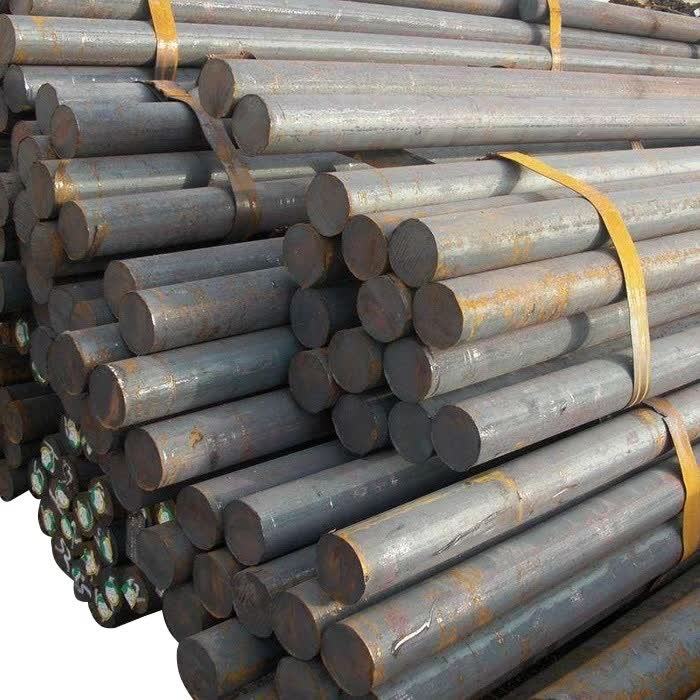
40CrMo SCM440 Round Steel Bar LCS-RND-811
40CrMo round steel’s high strength and hardenability, good toughness, small deformation during quenching, high creep strength and durable strength at high temperature.
40CrMo steel bar Steel Chemical Composition:
| Element | Composition (%) |
|---|---|
| Carbon (C) | 0.37~0.44 |
| Silicon (Si) | 0.17~0.37 |
| Manganese (Mn) | 0.50~0.80 |
| Chromium (Cr) | 0.90~1.20 |
| Phosphorus (P) | ≤0.35 |
| Sulfur (S) | ≤0.35 |
| Molybdenum (Mo) | 0.15~0.25 |
Application
40CrMo round steel is used to manufacture forgings that require higher strength and larger quenched and tempered sections than 35CrMo steel, such as large gears for locomotive traction, supercharger transmission gears, rear axles, extremely loaded connecting rods and spring clips, and can also be used for oil deep well drill pipe joints and fishing tools below 2000m.
Classification
Ⅰ. Classified by process
Round steel is divided into three types: hot rolled, forged and cold drawn. The specifications of hot-rolled round steel are 5.5-250 mm. Among them: 5.5-25 mm small round steel is mostly supplied in bundles of straight strips, which are often used as steel bars, bolts and various mechanical parts; round steel larger than 25 mm is mainly used for manufacturing mechanical parts and tube blanks of seamless steel pipes wait.
Ⅱ. Classification by chemical composition
Carbon steel can be divided into low carbon steel, medium carbon steel and high carbon steel according to chemical composition (that is, carbon content).
(1) Mild steel
Also known as mild steel, the carbon content is from 0.10% to 0.30%. Low carbon steel is easy to accept various processing such as forging, welding and cutting, and is often used to make chains, rivets, bolts, shafts, etc.
(2) Medium carbon steel
Carbon steel with a carbon content of 0.25% to 0.60%. There are killed steel, semi-killed steel, boiling steel and other products. In addition to carbon, it can also contain a small amount of manganese (0.70% to 1.20%). According to product quality, it is divided into ordinary carbon structural steel and high-quality carbon structural steel. Good thermal processing and cutting performance, poor welding performance. The strength and hardness are higher than low carbon steel, but the plasticity and toughness are lower than low carbon steel. Hot-rolled and cold-drawn materials can be used directly without heat treatment, or after heat treatment. Medium carbon steel after quenching and tempering has good comprehensive mechanical properties. The highest hardness that can be achieved is about HRC55 (HB538), and σb is 600-1100MPa. Therefore, in various uses of medium strength level, medium carbon steel is the most widely used. In addition to being used as building materials, it is also widely used in the manufacture of various mechanical parts.
(3) High carbon steel
Often called tool steel, the carbon content is from 0.60% to 1.70%, and it can be hardened and tempered. Hammers, crowbars, etc. are made of steel with a carbon content of 0.75%; cutting tools such as drills, taps, reamers, etc. are made of steel with a carbon content of 0.90% to 1.00%.
Classified by steel quality
According to the quality of steel, it can be divided into ordinary carbon steel and high-quality carbon steel.
(1) Ordinary carbon structural steel, also known as ordinary carbon steel, has wide restrictions on carbon content, performance range, and content of phosphorus, sulfur and other residual elements. In China and some countries, it is divided into three categories according to the guarantee conditions of delivery: Class A steel (Class A steel) is the steel with guaranteed mechanical properties. Class B steel (Class B steel) is steel with a guaranteed chemical composition. Special steel (C-type steel) is a steel that guarantees both mechanical properties and chemical composition, and is often used to manufacture more important structural parts. The most produced and used steel in China is A3 steel (Class A No. 3 steel) with a carbon content of about 0.20%, which is mainly used for engineering structures.
Some carbon structural steels also add trace amounts of aluminum or niobium (or other carbide-forming elements) to form nitrides or carbide particles to limit grain growth, strengthen the steel, and save steel. In China and some countries, in order to meet the special requirements of professional steel, the chemical composition and properties of ordinary carbon structural steel have been adjusted, thus developing a series of professional steel of ordinary carbon structural steel (such as bridges, buildings, Steel bars, steel for pressure vessels, etc.).
(2) Compared with ordinary carbon structural steel, high-quality carbon structural steel has lower content of sulfur, phosphorus and other non-metallic inclusions. According to the different carbon content and usage, this kind of steel can be roughly divided into three categories:
① Less than 0.25% C is low-carbon steel, especially 08F and 08Al with a carbon content of less than 0.10%, are widely used as deep-drawing parts such as automobiles and cans because of their good deep drawability and weldability ……wait. 20G is the main material for making ordinary boilers. In addition, low carbon steel is also widely used as carburizing steel for machinery manufacturing.
②0.25~0.60%C is medium carbon steel, which is mostly used in the quenched and tempered state to make parts in the machinery manufacturing industry.
③ More than 0.6% C is high carbon steel, which is mostly used in the manufacture of springs, gears, rolls, etc.
According to the different manganese content, it can be divided into two steel groups with ordinary manganese content (0.25-0.8%) and higher manganese content (0.7-1.0% and 0.9-1.2%). Manganese can improve the hardenability of steel, strengthen ferrite, and improve the yield strength, tensile strength and wear resistance of steel. Usually, the mark “Mn” is added after the grade of steel with high manganese content, such as 15Mn and 20Mn, to distinguish it from carbon steel with normal manganese content.
Classification by purpose
According to the application, it can be divided into carbon structural steel and carbon tool steel.
Carbon tool steel The carbon content is between 0.65 and 1.35%. After heat treatment, high hardness and high wear resistance can be obtained. It is mainly used to manufacture various tools, cutting tools, molds and measuring tools (see tool steel).
Carbon structural steel is divided into 5 grades according to the yield strength of steel:
Q195, Q215, Q235, Q255, Q275
Each brand is divided into A, B, C, and D grades due to different quality. There are four types at most, and some have only one; in addition, there are differences in the deoxidation method of steel smelting.
Deoxygenation method symbol:
F - boiling steel
b——semi-killed steel
Z——killed steel
TZ——special killed steel
Material of round steel: Q195, Q235, 10#, 20#, 35#, 45#, Q215, Q345, 12Cr1Mov, 15CrMo, 304, 316, 20Cr, 40Cr, 20CrMo, 40CrMo, 42CrMo, 40CrNiMo, GCr15, 65Mn, 50Mn , 50Cr, 3Cr2W8V, 20CrMnTi, 5CrMnMo, etc.
40CrNiMoA Alloy Round Steel Bar LCS-RND-812
| Product Name | Carbon steel bar |
|---|---|
| Material | 40CrNiMoA |
| Surface Treatment | Black Painted, PE Coated, Galvanized or Customized all available |
| Size | O.D: 8-480mm |
| W.T: 8-480mm | |
| Length: 1-12m | |
| Standard | ASTM, DIN, GB, JIS, BS, AISI |
| Technique | Hot Rolled |
| Payment terms | L/C at sight or T/T (30% as deposit) |
| Packing | Export standard package or as customers’ request |
| Samples | Free samples are provided but the fright is borne by the buyer |
Read More
Product Introduction
40CrNiMoA steel is a Chinese alloy steel, has high strength, toughness and good hardenability, and has anti-overheating stability, but has high white point sensitivity, temper brittleness and poor weldability. Preheating is required before welding, and stress relief treatment is required after welding.
Properties and Applications of 40CrNiMoA Alloy Steel :
40CrNiMoA steel is used after quenching and tempering, and is used to manufacture important parts requiring good plasticity, high strength and large size. For example, heavy-duty shafts in heavy-duty machines, steam turbine shafts with diameters greater than 250 mm, blades, transmissions, fasteners, crankshafts, gears, etc., can also be used for rotor shafts and blades operating at temperatures exceeding 400 °C.
Chemical Composition (%)
| Steel Grade | C | Si | Mn | P | S | Cr | Ni | Cu | Mo |
|---|---|---|---|---|---|---|---|---|---|
| 40CrNiMoA | 0.37~0.44 | 0.17~0.37 | 0.50~0.80 | Allowable residual content ≤0.025 | Allowable residual content ≤0.025 | 0.60~0.90 | 1.25~1.65 | Allowable residual content ≤0.025 | 0.15~0.25 |
40CrNiMoA Alloy Steel Mechanical Properties :
.Yield strength: ≥ 835 MPa
.Tensile strength: ≥ 980 MPa
.Elongation: ≥12%
.Rate of reduction in area: ≥55%
.Impact absorbing energy: ≥ 78 J
.Material Brinell Hardness: ≤ 269 (Annealed or high temperature tempered steel rod)
.Sample size: 25mm
40CrNiMoA heat treatment:
Heat treatment: (quenching 850 degrees; coolant: oil; tempering temperature 600 degrees; coolant: water, oil);
Steel annealing or high temperature tempering supply state Brinell hardness GBW≤269
Common quality defects of bearing parts after heat treatment are: overheating of the quenched microstructure, underheating, cracks in the quenched microstructure, insufficient hardness, deformation during heat treatment, surface decarbonization, soft spots, etc.
The main purpose of 40CrNiMoA:
High-strength parts such as aero-engine shafts, shafts, gears, fasteners, etc.
45 Round Steel Bar LCS-RND-813
45# steel bar Steel Chemical Composition:
| Element | Composition (%) |
|---|---|
| Carbon (C) | 0.42~0.50 |
| Silicon (Si) | 0.17~0.37 |
| Manganese (Mn) | 0.50~0.80 |
| Chromium (Cr) | ≤0.25 |
| Phosphorus (P) | ≤0.035 |
| Sulfur (S) | ≤0.035 |
| Molybdenum (Mo) | 0.15~0.25 |
| Nickel(Ni) | ≤0.25 |
Read More
45# round steel belonging to high-quality carbon structural steel, the hardness is not high and easy to cut. It is often used in molds to make templates, tips, guide posts, etc., but heat treatment is required. 45# steel is widely used in machinery manufacturing, and the mechanical properties of this steel are very good. Widely used in various important structural parts, especially those connecting rods, bolts, gears and shafts that work under alternating loads. But the surface hardness is low and not wear-resistant. The surface hardness of parts can be improved by quenching and tempering + surface quenching.
It is the first choice material for machining shaft parts. The cold plasticity of this steel is average, and annealing and normalizing are slightly better than quenching and tempering. It has higher strength and better machinability. After proper heat treatment, it can obtain certain toughness, plasticity and wear resistance. The source of materials is convenient. Suitable for hydrogen welding and argon arc welding, not very suitable for gas welding. Preheating is required before welding, and stress relief annealing should be carried out after welding.
Application
Due to its high strength and good wear resistance, 45# steel can be used to manufacture many mechanical parts, such as:
Bearing: No. 45 steel has good mechanical properties and wear resistance, and is suitable for manufacturing various bearings and transmission shafts.
Gears: No. 45 steel can be made into various gears, including cylindrical gears, bevel gears, etc., which are widely used in automobiles, construction machinery and other industries.
Forgings: No. 45 steel is easy to process and heat-treat, and can be made into forgings of various complex shapes, such as flanges, camshafts, etc.
Machine tool spindles and cutting tools: No. 45 steel has good hardness and strength, and can be used to manufacture machine tool spindles and various cutting tools.
Mold: No. 45 steel can be made into various molds and die-casting molds, which are suitable for the production of machine parts, auto parts and home appliances.
In short, due to its excellent mechanical properties and processing properties, No. 45 steel is widely used in machinery, automobiles, construction machinery and other industrie
Classification
Ⅰ. Classified by process
Round steel is divided into three types: hot rolled, forged and cold drawn. The specifications of hot-rolled round steel are 5.5-250 mm. Among them: 5.5-25 mm small round steel is mostly supplied in bundles of straight strips, which are often used as steel bars, bolts and various mechanical parts; round steel larger than 25 mm is mainly used for manufacturing mechanical parts and tube blanks of seamless steel pipes wait.
Ⅱ. Classification by chemical composition
Carbon steel can be divided into low carbon steel, medium carbon steel and high carbon steel according to chemical composition (that is, carbon content).
(1) Mild steel
Also known as mild steel, the carbon content is from 0.10% to 0.30%. Low carbon steel is easy to accept various processing such as forging, welding and cutting, and is often used to make chains, rivets, bolts, shafts, etc.
(2) Medium carbon steel
Carbon steel with a carbon content of 0.25% to 0.60%. There are killed steel, semi-killed steel, boiling steel and other products. In addition to carbon, it can also contain a small amount of manganese (0.70% to 1.20%). According to product quality, it is divided into ordinary carbon structural steel and high-quality carbon structural steel. Good thermal processing and cutting performance, poor welding performance. The strength and hardness are higher than low carbon steel, but the plasticity and toughness are lower than low carbon steel. Hot-rolled and cold-drawn materials can be used directly without heat treatment, or after heat treatment. Medium carbon steel after quenching and tempering has good comprehensive mechanical properties. The highest hardness that can be achieved is about HRC55 (HB538), and σb is 600-1100MPa. Therefore, in various uses of medium strength level, medium carbon steel is the most widely used. In addition to being used as building materials, it is also widely used in the manufacture of various mechanical parts.
(3) High carbon steel
Often called tool steel, the carbon content is from 0.60% to 1.70%, and it can be hardened and tempered. Hammers, crowbars, etc. are made of steel with a carbon content of 0.75%; cutting tools such as drills, taps, reamers, etc. are made of steel with a carbon content of 0.90% to 1.00%.
Classified by steel quality
According to the quality of steel, it can be divided into ordinary carbon steel and high-quality carbon steel.
(1) Ordinary carbon structural steel, also known as ordinary carbon steel, has wide restrictions on carbon content, performance range, and content of phosphorus, sulfur and other residual elements. In China and some countries, it is divided into three categories according to the guarantee conditions of delivery: Class A steel (Class A steel) is the steel with guaranteed mechanical properties. Class B steel (Class B steel) is steel with a guaranteed chemical composition. Special steel (C-type steel) is a steel that guarantees both mechanical properties and chemical composition, and is often used to manufacture more important structural parts. The most produced and used steel in China is A3 steel (Class A No. 3 steel) with a carbon content of about 0.20%, which is mainly used for engineering structures.
Some carbon structural steels also add trace amounts of aluminum or niobium (or other carbide-forming elements) to form nitrides or carbide particles to limit grain growth, strengthen the steel, and save steel. In China and some countries, in order to meet the special requirements of professional steel, the chemical composition and properties of ordinary carbon structural steel have been adjusted, thus developing a series of professional steel of ordinary carbon structural steel (such as bridges, buildings, Steel bars, steel for pressure vessels, etc.).
(2) Compared with ordinary carbon structural steel, high-quality carbon structural steel has lower content of sulfur, phosphorus and other non-metallic inclusions. According to the different carbon content and usage, this kind of steel can be roughly divided into three categories:
① Less than 0.25% C is low-carbon steel, especially 08F and 08Al with a carbon content of less than 0.10%, are widely used as deep-drawing parts such as automobiles and cans because of their good deep drawability and weldability ……wait. 20G is the main material for making ordinary boilers. In addition, low carbon steel is also widely used as carburizing steel for machinery manufacturing.
②0.25~0.60%C is medium carbon steel, which is mostly used in the quenched and tempered state to make parts in the machinery manufacturing industry.
③ More than 0.6% C is high carbon steel, which is mostly used in the manufacture of springs, gears, rolls, etc.
According to the different manganese content, it can be divided into two steel groups with ordinary manganese content (0.25-0.8%) and higher manganese content (0.7-1.0% and 0.9-1.2%). Manganese can improve the hardenability of steel, strengthen ferrite, and improve the yield strength, tensile strength and wear resistance of steel. Usually, the mark “Mn” is added after the grade of steel with high manganese content, such as 15Mn and 20Mn, to distinguish it from carbon steel with normal manganese content.
Classification by purpose
According to the application, it can be divided into carbon structural steel and carbon tool steel.
Carbon tool steel The carbon content is between 0.65 and 1.35%. After heat treatment, high hardness and high wear resistance can be obtained. It is mainly used to manufacture various tools, cutting tools, molds and measuring tools (see tool steel).
Carbon structural steel is divided into 5 grades according to the yield strength of steel:
Q195, Q215, Q235, Q255, Q275
Each brand is divided into A, B, C, and D grades due to different quality. There are four types at most, and some have only one; in addition, there are differences in the deoxidation method of steel smelting.
Deoxygenation method symbol:
F - boiling steel
b——semi-killed steel
Z——killed steel
TZ——special killed steel
Material of round steel: Q195, Q235, 10#, 20#, 35#, 45#, Q215, Q345, 12Cr1Mov, 15CrMo, 304, 316, 20Cr, 40Cr, 20CrMo, 45#, 42CrMo, 40CrNiMo, GCr15, 65Mn, 50Mn , 50Cr, 3Cr2W8V, 20CrMnTi, 5CrMnMo, etc.
C 276 Round Steel Bar LCS-RND-814
C-276 steel bar Steel Chemical Composition:
| Element | Composition (%) |
|---|---|
| Carbon (C) | ≤0.001 |
| Silicon (Si) | ≤0.008 |
| Manganese (Mn) | ≤0.1 |
| Chromium (Cr) | 0.145~0.165 |
| Phosphorus (P) | ≤0.003 |
| Sulfur (S) | ≤0.003 |
| Molybdenum (Mo) | 0.15~0.17 |
| Nickel(Ni) | 0.50~0.55 |
| Vanadium(V) | ≤0.035 |
| Steel (Fe) | 0.04-0.07 |
Read More
C-276 round steel is a is a new type of material with excellent wear resistance and corrosion resistance
Application
In automobile manufacturing, it is widely used to make components such as piston rings, valve guides, and engine block bushings, and it is also widely used in aircraft manufacturing.
Because it can still maintain high hardness and strength at high temperatures (second only to stainless steel), it is widely used in the manufacture of high-temperature structural parts such as heat-resistant parts and rocket nozzles in the aerospace industry.
In addition, because it also has good toughness and plasticity at low temperatures, it is also widely used in chemical machinery, food machinery manufacturing and other fields.
Classification
Ⅰ. Classified by process
Round steel is divided into three types: hot rolled, forged and cold drawn. The specifications of hot-rolled round steel are 5.5-250 mm. Among them: 5.5-25 mm small round steel is mostly supplied in bundles of straight strips, which are often used as steel bars, bolts and various mechanical parts; round steel larger than 25 mm is mainly used for manufacturing mechanical parts and tube blanks of seamless steel pipes wait.
Ⅱ. Classification by chemical composition
Carbon steel can be divided into low carbon steel, medium carbon steel and high carbon steel according to chemical composition (that is, carbon content).
(1) Mild steel
Also known as mild steel, the carbon content is from 0.10% to 0.30%. Low carbon steel is easy to accept various processing such as forging, welding and cutting, and is often used to make chains, rivets, bolts, shafts, etc.
(2) Medium carbon steel
Carbon steel with a carbon content of 0.25% to 0.60%. There are killed steel, semi-killed steel, boiling steel and other products. In addition to carbon, it can also contain a small amount of manganese (0.70% to 1.20%). According to product quality, it is divided into ordinary carbon structural steel and high-quality carbon structural steel. Good thermal processing and cutting performance, poor welding performance. The strength and hardness are higher than low carbon steel, but the plasticity and toughness are lower than low carbon steel. Hot-rolled and cold-drawn materials can be used directly without heat treatment, or after heat treatment. Medium carbon steel after quenching and tempering has good comprehensive mechanical properties. The highest hardness that can be achieved is about HRC55 (HB538), and σb is 600-1100MPa. Therefore, in various uses of medium strength level, medium carbon steel is the most widely used. In addition to being used as building materials, it is also widely used in the manufacture of various mechanical parts.
(3) High carbon steel
Often called tool steel, the carbon content is from 0.60% to 1.70%, and it can be hardened and tempered. Hammers, crowbars, etc. are made of steel with a carbon content of 0.75%; cutting tools such as drills, taps, reamers, etc. are made of steel with a carbon content of 0.90% to 1.00%.
Classified by steel quality
According to the quality of steel, it can be divided into ordinary carbon steel and high-quality carbon steel.
(1) Ordinary carbon structural steel, also known as ordinary carbon steel, has wide restrictions on carbon content, performance range, and content of phosphorus, sulfur and other residual elements. In China and some countries, it is divided into three categories according to the guarantee conditions of delivery: Class A steel (Class A steel) is the steel with guaranteed mechanical properties. Class B steel (Class B steel) is steel with a guaranteed chemical composition. Special steel (C-type steel) is a steel that guarantees both mechanical properties and chemical composition, and is often used to manufacture more important structural parts. The most produced and used steel in China is A3 steel (Class A No. 3 steel) with a carbon content of about 0.20%, which is mainly used for engineering structures.
Some carbon structural steels also add trace amounts of aluminum or niobium (or other carbide-forming elements) to form nitrides or carbide particles to limit grain growth, strengthen the steel, and save steel. In China and some countries, in order to meet the special requirements of professional steel, the chemical composition and properties of ordinary carbon structural steel have been adjusted, thus developing a series of professional steel of ordinary carbon structural steel (such as bridges, buildings, Steel bars, steel for pressure vessels, etc.).
(2) Compared with ordinary carbon structural steel, high-quality carbon structural steel has lower content of sulfur, phosphorus and other non-metallic inclusions. According to the different carbon content and usage, this kind of steel can be roughly divided into three categories:
① Less than 0.25% C is low-carbon steel, especially 08F and 08Al with a carbon content of less than 0.10%, are widely used as deep-drawing parts such as automobiles and cans because of their good deep drawability and weldability ……wait. 20G is the main material for making ordinary boilers. In addition, low carbon steel is also widely used as carburizing steel for machinery manufacturing.
②0.25~0.60%C is medium carbon steel, which is mostly used in the quenched and tempered state to make parts in the machinery manufacturing industry.
③ More than 0.6% C is high carbon steel, which is mostly used in the manufacture of springs, gears, rolls, etc.
According to the different manganese content, it can be divided into two steel groups with ordinary manganese content (0.25-0.8%) and higher manganese content (0.7-1.0% and 0.9-1.2%). Manganese can improve the hardenability of steel, strengthen ferrite, and improve the yield strength, tensile strength and wear resistance of steel. Usually, the mark “Mn” is added after the grade of steel with high manganese content, such as 15Mn and 20Mn, to distinguish it from carbon steel with normal manganese content.
Classification by purpose
According to the application, it can be divided into carbon structural steel and carbon tool steel.
Carbon tool steel The carbon content is between 0.65 and 1.35%. After heat treatment, high hardness and high wear resistance can be obtained. It is mainly used to manufacture various tools, cutting tools, molds and measuring tools (see tool steel).
Carbon structural steel is divided into 5 grades according to the yield strength of steel:
Q195, Q215, Q235, Q255, Q275
Each brand is divided into A, B, C, and D grades due to different quality. There are four types at most, and some have only one; in addition, there are differences in the deoxidation method of steel smelting.
Deoxygenation method symbol:
F - boiling steel
b——semi-killed steel
Z——killed steel
TZ——special killed steel
Material of round steel: Q195, Q235, 10#, 20#, 35#, 45#, Q215, Q345, 12Cr1Mov, 15CrMo, 304, 316, 20Cr, 40Cr, 20CrMo, C-276, 42CrMo, 40CrNiMo, GCr15, 65Mn, 50Mn , 50Cr, 3Cr2W8V, 20CrMnTi, 5CrMnMo, etc.
DT4C Pure Iron Round Steel Bar LCS-RND-815
Product Introduction
DT4C round steel has good processing and easy cutting, good electroplating, bright surface, and is not easy to damage the knife (soft iron is more sticky to the knife). Common specifications include hot-rolled rods, wire rods, cold-rolled thin strips, and cold-drawn rounds. The length is generally 2.5 meters and the surface is bright. The diameter tolerance is within negative 0.05, and the grinding rod can be controlled within 0.03. It is suitable for direct processing on automatic lathes with centering machines, which can improve production efficiency and save costs, etc.
Application
There are two common specifications, one is used as a deep drawing material, which can be stamped into extremely complex shapes;
The other is used as an electromagnetic material, which has high magnetic sensitivity and low antimagnetic, and is used in electronic electrician, electrical components, magnetic materials, amorphous products, relays, sensors, automobile brakes, textile machinery, electric meter solenoid valves, etc.
Classification
Common classifications of pure iron include electrical pure iron, electromagnetic pure iron, industrial pure iron, raw material pure iron, smelting pure iron, furnace charge pure iron, casting pure iron, alloy pure iron, NdFeB pure iron, casting pure iron, etc.
According to its use, pure iron is mainly divided into three categories: electrical pure iron, raw material pure iron and pure iron.
GCr15 Alloy Round Steel Bar LCS-RND-816
| Product Name | Carbon Round Iron Rod/Square Steel Bar |
|---|---|
| Standard | JIS, AISI, ASTM, DIN, TUV,BV,SUS,etc |
| Material | GCr15 |
| Diameter | 2~500mm |
| Length | 3000~6000mm |
| Type | Round/Square/Hexagonal/Angle/Flat Bar |
| Surface Treatment | Polished, Black, Grinding or as demand |
| Payment terms | 30%TT for deposit, 70% balance before shipment or LC at sigh |
| Packing | Wooden pallet or according to customer’s request |
GCr15 Alloy Steel Chemical Composition:
| Alloying elements | C | Si | Mn | P | S | Cr | Mo | Ni |
|---|---|---|---|---|---|---|---|---|
| Chemical composition range | 0.95% – 1.05% | 0.15% – 0.35% | 0.20% – 0.40% | Maximum 0.027% | Maximum 0.020% | 1.30% – 1.65% | 0.10% – 0.20% | Maximum 0.30% |
Mechanical properties:
| Mechanical properties | Numerical value |
|---|---|
| Tensile Strength | 745 MPa (MPa) or above |
| Yield Strength | 620 MPa or above |
| Elongatio | 12% or more |
| Hardness | HRC 58-64 |
Q345B and Q235 Round Steel Bar LCS-RND-817
Product Introduction
Q345B/C/D/E Q235 round steel is a is a kind of steel. It is a low-alloy steel widely used in bridges, vehicles, ships, buildings, pressure vessels, special equipment, etc., where “Q” means yield strength, and 345 means that the yield strength of this steel is 345MPa.
Different grades of Q345A, Q345B, Q345C, Q345D, and Q345E represent different impact temperatures. A refers to above 40 degrees, B above 20 degrees, C0 above, D-20 degrees above, E-40 degrees above, the difference between A and E refers to the difference in impact temperature in their performance. They are: Q235A grade, no shock; Q235B grade, 20 degree normal temperature shock; Q235C grade, 0 degree shock; Q235D grade, -20 degree shock; Q235E, -40 degree shock. At different shock temperatures, the shock values are also different.
Application
Compared with other materials, Q345B/C/D/E Q235 alloy steel has the advantages of higher tensile strength, excellent toughness, good heat resistance and lower alloy cost. Compared with other materials, 12CrMoA alloy steel has the advantages of higher tensile strength, excellent toughness, good heat resistance and lower alloy cost. In addition, 12CrMoA alloy steel also has good welding performance and corrosion resistance, and is widely used in automotive, aerospace, chemical, electric power, oil and gas and other fields
Classification
Ⅰ. Classified by process
Round steel is divided into three types: hot rolled, forged and cold drawn. The specifications of hot-rolled round steel are 5.5-250 mm. Among them: 5.5-25 mm small round steel is mostly supplied in bundles of straight strips, which are often used as steel bars, bolts and various mechanical parts; round steel larger than 25 mm is mainly used for manufacturing mechanical parts and tube blanks of seamless steel pipes wait.
Ⅱ. Classification by chemical composition
Carbon steel can be divided into low carbon steel, medium carbon steel and high carbon steel according to chemical composition (that is, carbon content).
(1) Mild steel
Also known as mild steel, the carbon content is from 0.10% to 0.30%. Low carbon steel is easy to accept various processing such as forging, welding and cutting, and is often used to make chains, rivets, bolts, shafts, etc.
(2) Medium carbon steel
Carbon steel with a carbon content of 0.25% to 0.60%. There are killed steel, semi-killed steel, boiling steel and other products. In addition to carbon, it can also contain a small amount of manganese (0.70% to 1.20%). According to product quality, it is divided into ordinary carbon structural steel and high-quality carbon structural steel. Good thermal processing and cutting performance, poor welding performance. The strength and hardness are higher than low carbon steel, but the plasticity and toughness are lower than low carbon steel. Hot-rolled and cold-drawn materials can be used directly without heat treatment, or after heat treatment. Medium carbon steel after quenching and tempering has good comprehensive mechanical properties. The highest hardness that can be achieved is about HRC55 (HB538), and σb is 600-1100MPa. Therefore, in various uses of medium strength level, medium carbon steel is the most widely used. In addition to being used as building materials, it is also widely used in the manufacture of various mechanical parts.
(3) High carbon steel
Often called tool steel, the carbon content is from 0.60% to 1.70%, and it can be hardened and tempered. Hammers, crowbars, etc. are made of steel with a carbon content of 0.75%; cutting tools such as drills, taps, reamers, etc. are made of steel with a carbon content of 0.90% to 1.00%.
Classified by steel quality
According to the quality of steel, it can be divided into ordinary carbon steel and high-quality carbon steel.
(1) Ordinary carbon structural steel, also known as ordinary carbon steel, has wide restrictions on carbon content, performance range, and content of phosphorus, sulfur and other residual elements. In China and some countries, it is divided into three categories according to the guarantee conditions of delivery: Class A steel (Class A steel) is the steel with guaranteed mechanical properties. Class B steel (Class B steel) is steel with a guaranteed chemical composition. Special steel (C-type steel) is a steel that guarantees both mechanical properties and chemical composition, and is often used to manufacture more important structural parts. The most produced and used steel in China is A3 steel (Class A No. 3 steel) with a carbon content of about 0.20%, which is mainly used for engineering structures.
Some carbon structural steels also add trace amounts of aluminum or niobium (or other carbide-forming elements) to form nitrides or carbide particles to limit grain growth, strengthen the steel, and save steel. In China and some countries, in order to meet the special requirements of professional steel, the chemical composition and properties of ordinary carbon structural steel have been adjusted, thus developing a series of professional steel of ordinary carbon structural steel (such as bridges, buildings, Steel bars, steel for pressure vessels, etc.).
(2) Compared with ordinary carbon structural steel, high-quality carbon structural steel has lower content of sulfur, phosphorus and other non-metallic inclusions. According to the different carbon content and usage, this kind of steel can be roughly divided into three categories:
① Less than 0.25% C is low-carbon steel, especially 08F and 08Al with a carbon content of less than 0.10%, are widely used as deep-drawing parts such as automobiles and cans because of their good deep drawability and weldability ……wait. 20G is the main material for making ordinary boilers. In addition, low carbon steel is also widely used as carburizing steel for machinery manufacturing.
②0.25~0.60%C is medium carbon steel, which is mostly used in the quenched and tempered state to make parts in the machinery manufacturing industry.
③ More than 0.6% C is high carbon steel, which is mostly used in the manufacture of springs, gears, rolls, etc.
According to the different manganese content, it can be divided into two steel groups with ordinary manganese content (0.25-0.8%) and higher manganese content (0.7-1.0% and 0.9-1.2%). Manganese can improve the hardenability of steel, strengthen ferrite, and improve the yield strength, tensile strength and wear resistance of steel. Usually, the mark “Mn” is added after the grade of steel with high manganese content, such as 15Mn and 20Mn, to distinguish it from carbon steel with normal manganese content.
Classification by purpose
According to the application, it can be divided into carbon structural steel and carbon tool steel.
Carbon tool steel The carbon content is between 0.65 and 1.35%. After heat treatment, high hardness and high wear resistance can be obtained. It is mainly used to manufacture various tools, cutting tools, molds and measuring tools (see tool steel).
Carbon structural steel is divided into 5 grades according to the yield strength of steel: Q195, Q215, Q235, Q255, Q275
Each brand is divided into A, B, C, and D grades due to different quality. There are four types at most, and some have only one; in addition, there are differences in the deoxidation method of steel smelting.
Deoxygenation method symbol: F – boiling steel
b——semi-killed steel
Z——killed steel
TZ——special killed steel
Material of round steel: Q195, Q235, 10#, 20#, 35#, 45#, Q215, Q345, 12Cr1Mov, 15CrMo, 304, 316, 20Cr, 40Cr, 20CrMo, Q345B/C/D/E Q235, 42CrMo, 40CrNiMo, GCr15, 65Mn, 50Mn , 50Cr, 3Cr2W8V, 20CrMnTi, 5CrMnMo, etc.
T10 Alloy Round Steel Bar LCS-RND-818
| Product Name | Carbon steel bar | |||||
|---|---|---|---|---|---|---|
| Material | T10 | |||||
| Color | Clean, blasting and painting or as required | |||||
| Technique | Hot Rolled/Cold Drawn | |||||
| Diameter | 10-400mm/as you required | |||||
| Length | 1-12m/as you required | |||||
| Standard | AISI,ASTM,DIN,JIS,GB ,JIS,SUS,EN,etc | |||||
| Packaging | Waterproof paper,and steel strip packed,Standard Export seaworthy package suit for all kinds of transport or as required |
Product Introduction
T10 carbon tool steel has higher strength and wear resistance than T8 and T9, but it has low thermal rigidity, low hardenability and large quenching deformation. The grains are fine. It is not easy to overheat during quenching and heating, and the fine grain structure can still be maintained. After quenching, there is an insoluble excess carbide in the steel, so it has high wear resistance and is used to manufacture tools with sharp edges and a little toughness.It is suitable for manufacturing various tools with poor cutting conditions, high wear resistance requirements, and a certain toughness and sharp edges that are not subject to sudden and severe shock and vibration. It can also be used as wear-resistant parts that are not subject to greater impact.
Characteristic
T10 is the most common kind of carbon tool steel with moderate toughness and low production costs. After heat treatment, the hardness can reach more than 60HRC. However, this steel has low hardenability and poor heat resistance (250℃). It is not easy to overheat during quenching and heating, and still maintains fine grains.The toughness is acceptable, the strength and wear resistance are higher than T7-T9, but the thermal rigidity is low, the hardenability is still not high, and the quenching deformation is large.
T10 Alloy Steel Chemical Composition:
| Alloying elements | Chemical composition range |
|---|---|
| C | 1.00% – 1.10% |
| Si | 0.10% – 0.35% |
| Mn | 0.20% – 0.50% |
| S | Maximum 0.030% |
| P | Maximum 0.030% |
Scope of application
This kind of steel is widely used and is suitable for manufacturing various tools with poor cutting conditions, high wear resistance requirements, and not subject to sudden and severe shock and vibration, which require a certain toughness and sharp edges, such as turning tools, planers, drill bits, taps, reaming tools, screw teeth, milling cutters, hand saws, saw blades, cold heading molds, dies, wire drawing molds, aluminum alloy cold extrusion concave molds, paper cutting molds, plastic forming molds, small-size cold-cut edge molds and punching molds, low-precision and simple-shaped measuring tools (such as pallets, etc.), can also be made. Used as wear-resistant parts that are not subject to greater impact, etc
Request a Quote
Tell us the product, grade, standard, sizes and quantities your project needs. Our team will reply with a clear quotation and delivery plan.
Phone: (945) 227-9608
Email: contact@lifestyleconstructionsupplies.com
Website: lifestyleconstructionsupplies.com
Address: 811 East Plano Pkwy Ste 117, Plano, TX 75074